
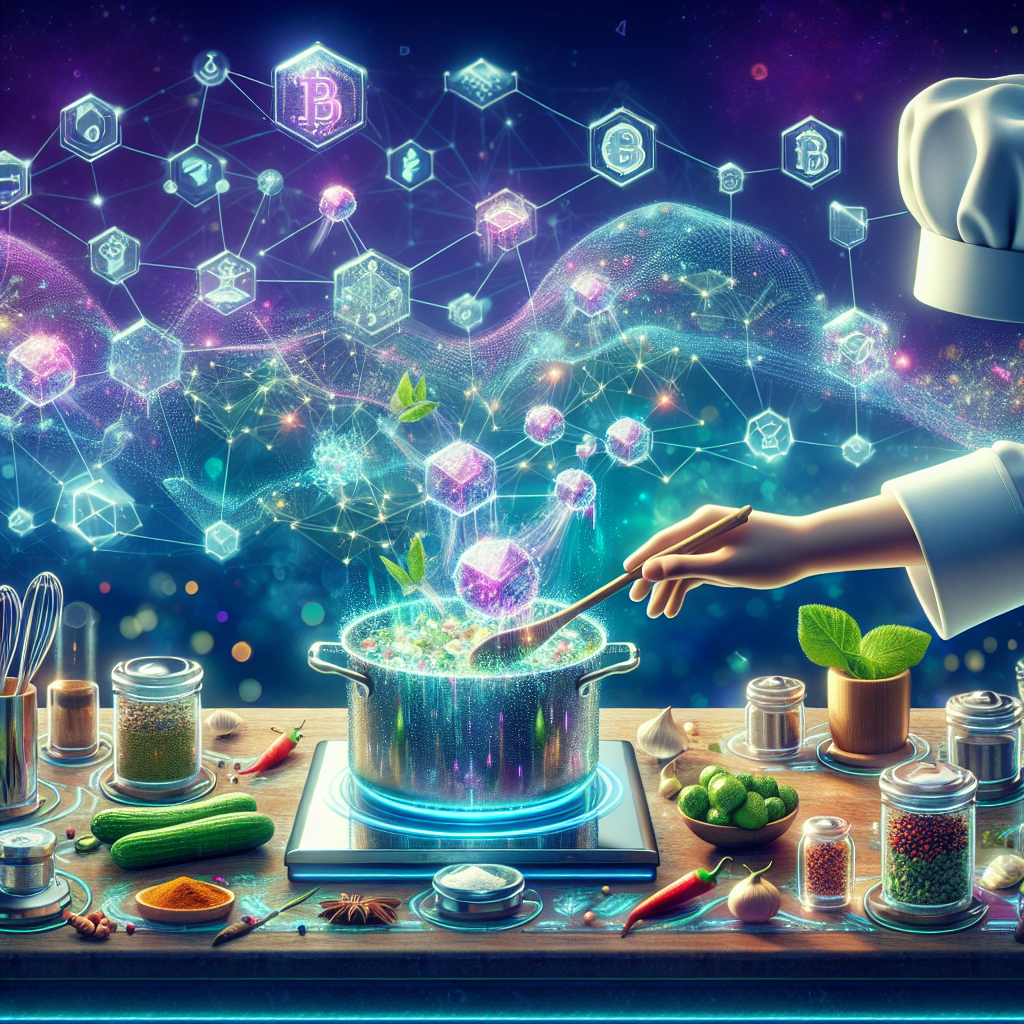
Tokenizing Taste: How Blockchain Flavor Protocols Are Creating On-Chain Culinary Experiences, Yield Markets, and Decentralized Chef DAOs Right Now
What if making a risotto could earn you staking rewards? Or if the flavor profile of your grandma’s secret stew could be minted as an NFT and composably traded on an open culinary protocol? These aren’t just heady hypotheticals. In 2024, blockchain-based “flavor protocols” are quietly turning kitchens, pantries, and even taste buds into programmable assets. Chefs, food scientists, and DeFi degens are collaborating on a new frontier: the tokenization of taste.
The last decade saw music, art, and real estate digitized and traded on-chain. But food, despite being one of humanity’s most universal experiences, remained stubbornly offline. Now, thanks to composable flavor standards, oracle networks for taste data, and emerging chef DAOs, the culinary world is getting its own on-chain stack. The stakes are high: whoever cracks the code for digital flavor could disrupt recipe IP, supply chain transparency, and even the economics of dining itself.
Why does this matter? Because food is culture, commerce, and community rolled into one. By bringing flavor on-chain, blockchain projects are giving chefs, farmers, and even home cooks new financial tools and creative incentives. But they’re also opening up fresh risks and regulatory puzzles that go way beyond the kitchen.
Let’s dig into what’s actually happening, why it matters now, and how you might want to get a seat at this new table—whether you’re an investor, builder, chef, or just someone who loves a good meal.
From Farm to Fork: How Culinary Tokenization Arrived
The idea of “tokenizing taste” sounds futuristic, but its roots are surprisingly practical. For years, supply chain projects like IBM Food Trust and Provenance used blockchain to track produce, meat, and wine. These systems improved traceability and transparency, but they didn’t touch the actual flavor—the essence that makes a tomato from Sicily different from one in Jersey.
In 2022, a handful of food scientists and Web3 builders started asking: what if you could capture and trade flavor itself? The technical breakthrough was the development of “open flavor standards”—think ERC20 for tastes. These standards assign digital fingerprints to flavor profiles, using a mix of chemical analysis, crowdsourced tasting, and machine learning. Combined with IoT-enabled kitchen hardware, it became possible to verify not just the supply chain, but the taste itself.
By late 2023, at least a dozen startups and DAOs were experimenting with:
- Flavor NFTs: Unique recipes, restaurant dishes, or even “virtual tastings” minted as non-fungible tokens.
- Yield-bearing flavor tokens: Staking or farming tokens linked to culinary experiences, ingredient baskets, or chef collectives.
- Decentralized Chef DAOs: Groups of chefs and foodies coordinating menus, events, or even pop-up restaurants, governed by on-chain voting.
This convergence of flavor science and DeFi mechanics laid the groundwork for today’s on-chain culinary economy.
The Mechanics: How Blockchain Flavor Protocols Work
To understand what’s possible, let’s break down the core components of blockchain flavor protocols.
1. Digitizing Flavor Profiles
At the heart of these protocols is a data layer that breaks down taste into quantifiable attributes—sweetness, umami, bitterness, mouthfeel, aroma, and more. Projects like GastroChain and FlavorFi use a mix of:
- Chemical sensors: Devices that measure volatile compounds and create a “flavor print.”
- Crowdsourced tasting panels: Human tasters rate and describe flavors, often in return for token rewards.
- Machine learning models: Algorithms fine-tune and validate the flavor data, ensuring consistency.
The result: a digital asset that represents a specific flavor or dish, verified by both machines and people.
2. Tokenizing and Trading
Once digitized, these flavor profiles can be:
- Minted as NFTs: Unique recipes, signature dishes, or even “flavor moments” (think a chef’s limited-edition dessert) become tradable tokens.
- Fractionalized: High-value recipes or ingredient baskets can be split into shares, enabling collective ownership or staking.
- Composed and remixed: Just as DeFi protocols allow “money legos,” flavor tokens can be combined or mutated to create new culinary experiences.
3. On-Chain Yield and DeFi Integration
Some projects add DeFi mechanics:
- Staking flavor tokens: Earn rewards for holding or providing liquidity to pools of flavor assets.
- Yield markets: Chef DAOs or food collectives issue tokens that pay a share of profits from pop-up events, catering gigs, or digital tastings.
- Insurance and reputation layers: Smart contracts can escrow funds or reputation tokens, reducing the risk of “rug pulls” in the culinary world.
4. Governance and Community
Decentralized Chef DAOs coordinate everything from menu design to food safety standards. Token holders vote on:
- Which dishes get featured or promoted
- Who gets invited to exclusive tastings
- How to split revenue or distribute yield
This is more than just a technical upgrade. It’s a new social contract for how food is created, shared, and valued.
Real-World Examples: Case Studies and Data
Let’s move from theory to practice. Here’s what’s actually happening on the ground in 2024.
GastroChain: The Open Flavor Protocol
GastroChain is one of the largest open-source protocols for digitizing and trading flavor. As of Q2 2024:
- Over 40,000 unique flavor NFTs have been minted, representing everything from a Michelin-starred chef’s tasting menu to street food recipes.
- The top 10 flavor NFTs have traded for between 1–5 ETH each, with rare dishes linked to exclusive IRL experiences fetching the highest prices.
- The protocol’s DAO includes 2,300+ token holders, who collectively govern which dishes are featured and how protocol fees are spent.
FlavorFi: DeFi Meets the Dinner Table
FlavorFi takes DeFi mechanics and fuses them with food:
- Users can stake FLAVR tokens in “ingredient baskets”—tokenized portfolios of spices, produce, or wines.
- Yields come from real-world sales and licensing agreements with restaurants and food brands.
- In Q1 2024, the protocol paid out an estimated $180,000 in yield to token holders, funded by partnerships with 60+ small food vendors.
ChefCollective DAO: Decentralized Culinary Events
ChefCollective DAO operates as a decentralized event producer:
- Chefs propose pop-up events or tasting menus, which are voted on by DAO members.
- Winning proposals get funding from the DAO treasury, with profits distributed to both chefs and token holders.
- In 2023–2024, ChefCollective funded 17 events across 5 countries, with average attendance of 80–150 people per event.
Data Snapshot
- User base: Combined, these protocols report between 30,000–50,000 active wallets, with spikes during major food festivals or NFT drops.
- Revenue: Total on-chain revenue for the sector is difficult to estimate, but leading protocols suggest a combined annualized run rate of $2–5 million, mostly from NFT sales, staking fees, and event proceeds.
Risks, Limitations, and Trade-Offs
Tokenizing taste is audacious, but it’s not risk-free. Here’s what’s keeping founders, users, and policymakers up at night.
Technical and Data Challenges
- Subjectivity of taste: No matter how clever the sensors or algorithms, taste is deeply personal and cultural. Standardizing it is fraught.
- Data integrity: Fraudulent or low-quality flavor data could devalue tokens or undermine trust in the protocol.
- Hardware reliability: Many systems rely on IoT sensors or tasting panels, which can be hacked, spoofed, or manipulated.
Economic and User Risks
- Volatility: Flavor NFTs and tokens can be highly illiquid, with prices fluctuating based on hype or chef celebrity.
- Speculation vs. utility: There’s a thin line between genuine culinary innovation and vaporware. Some “flavor tokens” may serve little purpose beyond speculation.
- Access barriers: Many protocols require crypto wallets, staking, or KYC—potentially excluding non-crypto-native chefs or diners.
Regulatory and IP Concerns
- Recipe IP: Who owns a digitized flavor or recipe? Laws vary widely, and enforcement is murky.
- Food safety: Tokenized recipes could encourage unregulated or unsafe culinary experiments, challenging public health oversight.
- Securities law: Yield-bearing food tokens could attract regulatory scrutiny, especially in the US and EU.
Social and Cultural Trade-Offs
- Commodification of culture: Turning traditional or indigenous recipes into tradable tokens risks cultural appropriation or dilution.
- Inequality: Well-known chefs and food brands may dominate, leaving small creators behind—unless DAOs actively counterbalance this.
Quick Risk Checklist
- If you’re a user or trader: Beware of illiquid markets and hype cycles.
- If you’re a chef or creator: Understand how your IP is protected (or not).
- If you’re a builder: Prioritize security and data integrity from day one.
- If you’re a regulator or policymaker: Monitor for consumer protection and IP rights issues.
Practical Guide: Getting Involved (or Staying Safe)
Whether you want to invest, build, or just try a tokenized tasting menu, here’s how to approach this emerging sector.
For Traders and Investors
- Do your homework: Scrutinize the protocol’s team, DAO structure, and flavor data methodology.
- Assess liquidity: Check secondary market activity for NFTs and tokens; avoid thinly traded assets.
- Diversify: Don’t bet the farm on a single chef, dish, or protocol—spread risk across projects.
For Builders and Developers
- Focus on UX: Culinary tokenization is only as useful as it is accessible—prioritize seamless onboarding for non-crypto users.
- Open standards: Build with interoperability in mind; the most successful protocols will talk to each other.
- Community incentives: Use DAOs and token rewards to attract not just chefs, but tasters, food scientists, and everyday eaters.
For Chefs, Food Brands, and Creators
- Protect your IP: Consult with IP lawyers before minting unique recipes or flavor profiles.
- Engage your audience: Use token drops, exclusive tastings, or DAO votes to build loyalty and buzz.
- Experiment, but manage risk: Start with limited editions or partnerships before going all-in.
For Policymakers and Regulators
- Monitor for consumer risks: Ensure food safety and truth-in-labeling standards are not skirted by on-chain protocols.
- Clarify recipe IP law: Update frameworks for the digital era; consider special rules for flavor NFTs and DAOs.
- Engage with builders: Don’t wait for scandals—invite protocol teams to policy roundtables and workshops.
Looking Ahead: The Next Course in On-Chain Cuisine
The tokenization of taste is more than a novelty—it’s a new market architecture for how we experience, share, and value food. In the next 12–24 months, expect to see:
- Deeper DeFi integration: As flavor tokens become composable assets, they’ll find their way into lending, insurance, and prediction markets.
- Mainstream chef adoption: High-profile chefs and food brands are already experimenting with flavor NFTs and DAOs; more will follow.
- Regulatory movement: Governments and IP bodies are waking up to the challenge, especially as real money and livelihoods flow through these systems.
- New cultural norms: As with music and art NFTs, expect heated debates over authenticity, ownership, and the role of community in shaping food culture.
For now, the kitchen is open, and anyone can grab a seat. Whether this is a flash-in-the-pan trend or the start of a new culinary era will depend on how thoughtfully we build, govern, and taste the future—one token at a time.
Leave a Reply