
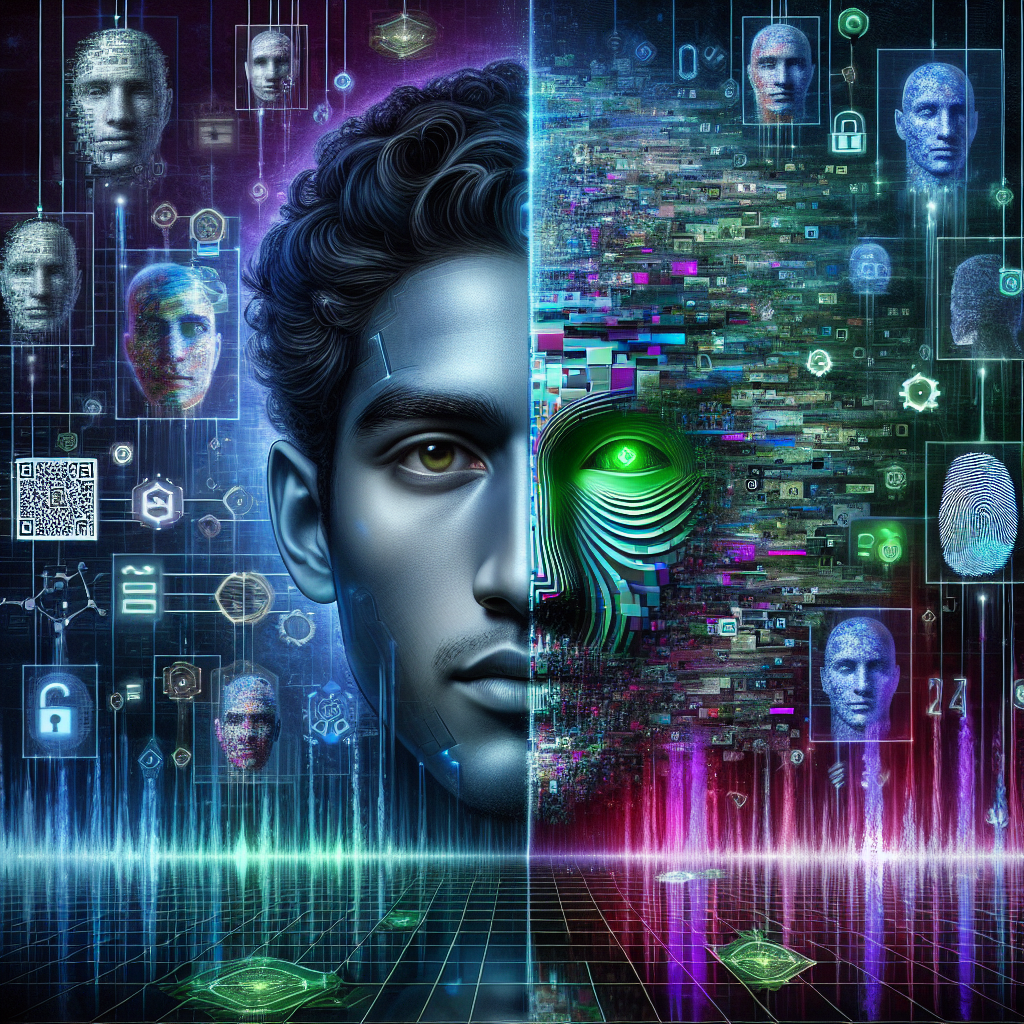
Decentralized Deepfakes: How Blockchain-Based Authentication Protocols Are Combating Synthetic Media and Rebuilding Trust Online Today
It’s getting harder every day to believe your own eyes. A viral video shows a world leader declaring war—or is it another deepfake? An audio clip implicates a celebrity in a scandal, but the voice might as well be an algorithm’s puppet. For anyone trying to make sense of what’s real online, the explosion of synthetic media is a chilling new reality.
The technology behind deepfakes—the AI-driven manipulation of images, audio, and video—has advanced at breakneck speed. In 2017, the first convincing face-swapping videos shocked the internet. By 2024, anyone with a smartphone can generate synthetic voices and faces that can fool even trained observers. The result: a trust crisis that threatens everything from elections to financial markets to the basic fabric of online discourse.
But there’s a new countermove emerging from the world of blockchain and decentralized tech. Instead of trying to spot fakes after the fact, what if we could cryptographically prove what’s real from the moment it’s made? That’s the promise of blockchain-based authentication protocols—an approach that’s gaining traction among media organizations, tech giants, and a new wave of Web3 startups.
In this feature, we’ll break down what’s actually happening beneath the hype, why it matters right now, and how decentralized tools are changing the fight against synthetic media. We’ll dive into concrete examples, real-world results, and the risks and trade-offs that come with these ambitious solutions.
The Deepfake Dilemma: Why Synthetic Media Is a Ticking Time Bomb
The term “deepfake” blends “deep learning” and “fake,” but the implications are far from academic. Today’s generative AI models can synthesize faces, voices, and bodies with uncanny realism. What started as a fringe internet curiosity is now a mainstream phenomenon:
- Fake news videos: In 2019, a deepfake video of Facebook CEO Mark Zuckerberg “admitting” to data abuses went viral. It wasn’t real—but it fooled millions.
- Financial scams: In 2023, a UK-based energy firm lost over $240,000 after a fraudster used AI-generated audio to mimic the CEO’s voice and authorize a wire transfer.
- Political chaos: In the lead-up to global elections, there’s mounting evidence of deepfakes being weaponized to spread disinformation, undermine trust, and incite violence.
The stakes are high for everyone:
– Individuals risk having their likeness, voice, or words manipulated for blackmail, harassment, or fraud.
– Businesses face reputational damage, financial loss, and legal headaches.
– Societies grapple with an erosion of trust in media, institutions, and even each other.
Where Blockchain and Authentication Protocols Enter the Fray
The core challenge with deepfakes isn’t just detection—it’s provenance. Once a piece of digital media is out in the wild, it’s nearly impossible to prove where it came from, who altered it, or whether it’s authentic. Traditional digital signatures and watermarks help, but they’re often fragile and easy to strip out.
Here’s where blockchain enters the picture. At its heart, a blockchain is an immutable, decentralized ledger—a public record that can prove the authenticity and origin of digital assets without relying on a single authority.
How Blockchain-Based Authentication Works
In practice, blockchain-based authentication protocols for media generally rely on three pillars:
- Capture and sign at the source: Devices (cameras, phones, even microphones) cryptographically sign media files at the moment of creation. This signature is unique and tied to the device’s hardware keys.
- Store hashes on-chain: Instead of uploading massive media files to the blockchain (which is costly and impractical), only a cryptographic hash or fingerprint is stored. This hash proves the file’s integrity and timestamp.
- Verification layers: Anyone can compare a media file’s hash to what’s on-chain. If they match, and the signature checks out, the file is authentic. If not, it’s been manipulated or forged.
Some protocols also include metadata like GPS location, device type, or even witness signatures, further strengthening the chain of custody.
Real-World Examples: Who’s Building and Deploying These Tools?
While the concept sounds futuristic, several projects and organizations are already putting blockchain-based authentication to work:
The Content Authenticity Initiative (CAI)
Founded by Adobe, The New York Times, and Twitter, CAI focuses on creating open standards for media provenance. While not strictly blockchain-based, CAI’s technical infrastructure supports integration with decentralized ledgers for tamper-proof records. In 2023, Reuters piloted CAI tools to sign and timestamp war photography sent from conflict zones, allowing newsrooms and readers to verify authenticity.
Starling Lab and “Provenance-as-a-Service”
Starling Lab, a collaboration between Stanford and USC, uses blockchain to authenticate sensitive media, including Holocaust survivor testimony. By anchoring media fingerprints to blockchains like Ethereum and Filecoin, the project ensures long-term integrity and verifiability—even as storage technologies evolve.
Numbers Protocol
Numbers Protocol is a Web3 startup building a “decentralized photo network.” Their app, Capture Cam, lets users mint images as NFTs with embedded provenance data, including device signatures and location. Over 100,000 photos have been registered on-chain since 2022, with adoption among journalists and citizen reporters in regions prone to censorship.
Microsoft’s Project Origin
Microsoft, BBC, and CBC, among others, have partnered on Project Origin to create authenticated media workflows. While Project Origin currently leans on traditional PKI (public key infrastructure), it’s exploring blockchain backends for decentralized verification—especially for high-value, high-risk content.
Data Points
- According to a 2023 study by Sensity AI, the number of detected deepfake videos online doubled every six months between 2019 and 2023, crossing 500,000 identified videos by late 2023.
- Numbers Protocol reports over 1 million on-chain media registrations as of Q2 2024, a sign of growing demand for decentralized provenance solutions.
The Mechanics: Under the Hood of Decentralized Authentication
Blockchain-based authentication isn’t a silver bullet, but it offers several concrete advantages over traditional methods:
Tamper Resistance
Once a media file’s hash is recorded on a blockchain, altering the file would change its hash, breaking the chain of trust. This makes after-the-fact edits easy to spot.
Decentralized Trust
Instead of relying on a single gatekeeper (like a social media platform or a government agency), anyone can verify a file’s provenance by querying the blockchain. This open verification cuts down on censorship risks and single points of failure.
Composability and Automation
Smart contracts allow for more advanced use cases:
– Automated takedown requests for unverified or forged content
– Tokenized incentives for whistleblowers or citizen journalists who capture authentic footage
– Cross-platform reputation scores for trusted sources
Integration with NFTs and Digital Rights
By tying provenance data to NFTs, creators can prove originality, combat plagiarism, and automate licensing or royalties. For traders, this means more reliable due diligence on digital collectibles or media assets.
Risks, Limitations, and Trade-Offs
No technology is a panacea. Blockchain-based authentication protocols face serious challenges—technical, regulatory, and human:
Technical Risks
- Device compromise: If a device’s signing keys are hacked, malicious actors can generate “authentic” forgeries.
- Privacy concerns: Embedding location or metadata on-chain can expose sensitive information, especially for journalists or activists.
- Scalability: Storing even hashes for millions of media files can clog public blockchains, raising cost and speed issues.
Regulatory and Legal Uncertainty
- Jurisdictional issues: Cross-border legal frameworks for digital evidence are patchy at best.
- Deepfake laws: While some countries outlaw malicious deepfakes, enforcement is inconsistent and often lags behind technology.
- Right to be forgotten: Immutable blockchain records may conflict with data erasure rights in regions like the EU.
Economic and User Adoption Barriers
- Onboarding friction: For mainstream users, cryptographic keys and blockchain wallets remain daunting.
- Cost: Even small transaction fees can add up for high-volume media creators.
- Network effects: Unless major platforms and devices adopt the same protocols, fragmented standards can undermine trust.
Social and Ethical Dilemmas
- Weaponizing authenticity: Authoritarian regimes could demand “proof” for all media, stifling dissent.
- False confidence: Users may trust on-chain signatures without understanding their limitations.
Practical Advice: How to Navigate the New Landscape
Whether you’re a trader, builder, investor, or policymaker, here’s how you can respond to the challenges and opportunities of decentralized authentication:
For Traders and Collectors
- Check provenance: Before buying digital media or NFTs, verify on-chain signatures and metadata. Use trusted explorers or third-party audit tools.
- Watch for forgery vectors: Remember that even “authentic” files can be faked if device keys are compromised. Look for multi-signature or witness-backed provenance when possible.
For Developers and Builders
- Prioritize UX: Hide blockchain complexity behind friendly interfaces. Automate wallet creation and signature verification for end users.
- Open standards: Build on or contribute to open protocols like CAI or Project Origin to maximize interoperability.
- Plan for privacy: Let users opt in or out of metadata disclosure. Use zero-knowledge proofs or off-chain storage for sensitive data.
For Investors
- Due diligence: Evaluate projects on scalability, standards adoption, and real-world traction—not just whitepapers.
- Diversify: The authentication arms race isn’t winner-take-all. Look for projects addressing different verticals (news, art, enterprise, etc).
For Policymakers and Platforms
- Support standards: Encourage adoption of open, interoperable protocols across devices and platforms.
- Balance rights: Craft laws that protect both privacy and authenticity, with clear guidelines for immutable records.
- Invest in education: Public awareness campaigns can help users spot deepfakes and understand provenance tools.
Quick Checklist
- Verify before you share: Use blockchain explorers or CAI-compatible tools to check media signatures.
- Be skeptical of “proof”: No protocol is foolproof; always consider the source and context.
- Stay updated: Follow developments from major standards bodies and authentication projects.
The Road Ahead: Decentralized Trust in a Synthetic Age
The fight against deepfakes is a cat-and-mouse game, but blockchain-based authentication is shifting the balance. Instead of forever reacting to fakes, we’re starting to build a world where real media can prove itself from birth. It’s not perfect—no technical fix ever is—but it’s a powerful new tool for restoring trust online.
In the next 12 to 24 months, expect to see:
– More newsrooms, platforms, and device makers piloting or adopting these protocols—sometimes quietly, sometimes as headline-grabbing features.
– An arms race between authentication tools and ever-smarter AI forgeries.
– Policy debates about privacy, censorship, and the right to anonymity versus the need for trust.
For all the noise and uncertainty, one thing is clear: authenticity is becoming a scarce commodity, and decentralized tech offers a fighting chance to protect it. As the synthetic media wave crashes over the internet, those who can prove what’s real will have an edge—in business, in politics, and in the daily scramble to separate truth from fiction.
As blockchain and Web3 infrastructure matures, the tools for media authentication will get easier to use and harder to evade. The trust crisis won’t vanish overnight, but with the right mix of technology, policy, and public awareness, we may just keep our grip on reality a little bit longer.
Leave a Reply