
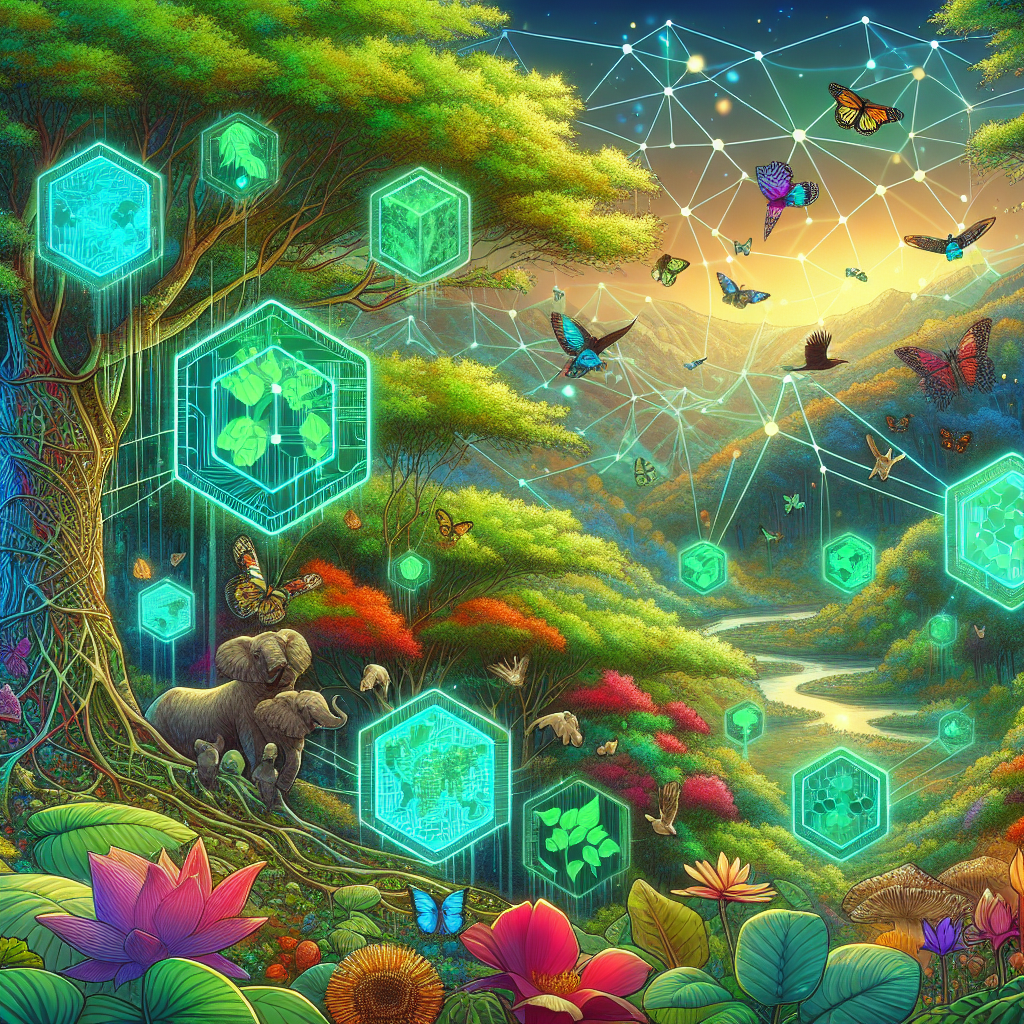
Crypto Meets Carbon: How On-Chain Regenerative Finance Protocols Are Tokenizing Biodiversity and Creating New Incentives for Nature Conservation Today
The planet’s biodiversity is in crisis. According to the World Wildlife Fund, global wildlife populations have dropped by nearly 70% since 1970. The drivers are well-known: deforestation, overfishing, pollution, and the relentless expansion of human activity into wild spaces. Yet, despite dire warnings, most conservation funding is limited, slow, and often tangled in bureaucracy.
Now, a new movement is emerging at the intersection of crypto and conservation. Regenerative Finance, or ReFi, is harnessing blockchain technology to create on-chain markets for environmental assets like carbon credits and biodiversity tokens. These protocols aim to channel capital directly into nature-positive projects, sidestepping many of the inefficiencies that plague traditional systems.
Why does this matter now? Three reasons. First, the climate crisis is no longer a future problem—it’s here, and the clock is ticking. Second, digital asset infrastructure has matured enough to support programmable, transparent markets for things like carbon. Third, there’s a growing appetite among investors, companies, and even governments to tie financial performance to real-world ecological outcomes.
But how does this all work in practice? Who’s building these systems, and what are the risks and rewards? Let’s dig into the world of on-chain ReFi, where conservation meets crypto—and where the next wave of incentives for protecting nature may be minted.
Regenerative Finance: A Primer
Regenerative Finance, often abbreviated as ReFi, refers to a set of blockchain-based protocols and tools designed to fund, track, and incentivize activities that restore or sustain natural ecosystems. Unlike traditional finance, which often focuses on maximizing short-term profits (sometimes at nature’s expense), ReFi explicitly tries to align economic incentives with ecological restoration.
ReFi grew out of two converging trends:
- The rise of decentralized finance (DeFi): In 2020–2022, DeFi protocols showed that on-chain markets could coordinate billions of dollars without intermediaries, using smart contracts and tokenized assets.
- Growing urgency around climate action: As global efforts to curb emissions lagged, activists, scientists, and some entrepreneurs started looking for ways to make environmental impact more “investable.”
The earliest ReFi projects focused on carbon credits, but the sector has quickly expanded. Now, new protocols are experimenting with tokenizing biodiversity, water rights, and even entire landscapes.
How On-Chain Protocols Tokenize Carbon and Biodiversity
At the heart of ReFi is the idea that environmental outcomes can be quantified, verified, and “tokenized” on a blockchain. Here’s how it works:
1. Project Origination
Local conservation groups, landowners, or NGOs undertake projects—say, protecting a rainforest or restoring a wetland. These projects are assessed and verified, often using standards like Verra’s Verified Carbon Standard or the Gold Standard for carbon, or new methodologies for biodiversity.
2. Tokenization
Once verified, the environmental “output” (e.g., one metric ton of carbon sequestered, or a hectare of high-biodiversity habitat protected) is minted as a digital token on a blockchain. Each token represents a discrete, auditable claim. These are sometimes called carbon tokens, biodiversity credits, or natural capital assets.
- Example tokens:
- BCT (Base Carbon Tonne) by Toucan Protocol
- NCT (Nature Carbon Tonne) by KlimaDAO
- BioCredits by Open Forest Protocol (pilot phase)
- Regen Credits by Regen Network
3. On-Chain Marketplaces
These tokens can be traded, held, or “retired” (taken out of circulation) to offset emissions or demonstrate impact. Marketplaces like Toucan, KlimaDAO, and C3 enable transparent, permissionless trading and tracking.
4. Incentive Alignment
Protocols may offer yield, rewards, or governance rights to token holders. Some platforms allow users to stake biodiversity credits for additional returns, or to participate in decentralized governance that shapes conservation priorities.
Real-World Examples: Protocols in Action
Let’s move from theory to practice. Here are snapshots of how on-chain ReFi is actually being used today:
Toucan Protocol
Launched in 2021, Toucan built a bridge between traditional carbon registries and the Polygon blockchain. By mid-2022, over 25 million carbon credits—roughly 2% of the world’s voluntary carbon market—had been tokenized through Toucan. This allowed for instant trading, composability (carbon credits used as DeFi collateral), and transparent retirement records.
Regen Network
Regen Network is focused on land-based carbon and biodiversity credits, mainly for regenerative agriculture and forestry. Their “ecocredits” are verified using satellite imagery and community reporting. In 2023, Regen piloted biodiversity credits tied to specific land parcels in Latin America, opening the door to markets for species preservation and ecosystem health.
Open Forest Protocol
This protocol uses blockchain to track forest growth and carbon sequestration, with data uploaded by local monitors and verified through a decentralized network. Open Forest is experimenting with biodiversity modules that could allow tokenization of species richness or habitat integrity.
Celo and ReFi Spring
Celo, a blockchain with a strong regenerative focus, has launched several ReFi projects through its ReFi Spring initiative. These include biodiversity tokens for African savanna restoration and pilot credits for pollinator habitat.
Numbers to note:
– As of early 2024, on-chain carbon markets have processed an estimated $150–$300 million in tokenized credits, according to ReFi Data.
– Projects like Toucan and KlimaDAO have enabled the retirement of millions of tons of carbon on-chain, though volumes have fluctuated with market sentiment and crypto prices.
Why This Matters: Opportunities and Implications
Tokenizing carbon and biodiversity unlocks several powerful (and sometimes controversial) possibilities:
- Speed and transparency: On-chain systems settle trades instantly and make all transactions public. This can reduce fraud and double-counting, big issues in traditional carbon markets.
- Liquidity and composability: Nature-based assets can become part of the broader DeFi universe, used as collateral, integrated into yield products, or bundled with NFTs for fundraising.
- Global access: Anyone with an internet connection can participate, from rainforest NGOs to crypto traders in Singapore.
- Programmable incentives: Smart contracts make it possible to automate payouts for verified ecological outcomes, or to route a share of trading fees back to frontline conservationists.
But there are also tough questions. Will tokenization turn biodiversity into a speculative bubble? Can digital markets really influence what happens on the ground? And are these systems robust enough to handle the complexity and messiness of nature?
Risks, Limitations, and Trade-Offs
No technology is a silver bullet, and ReFi is no exception. Here are the most pressing challenges:
Technical Risks
- Data integrity: Environmental data (satellite imagery, field reports) can be faked or misinterpreted. Oracles and verification networks are still maturing.
- Smart contract vulnerabilities: Bugs or exploits could lead to loss or theft of valuable credits.
- Blockchain sustainability: Ironically, some blockchains have high energy use, though most ReFi activity is on proof-of-stake chains.
Regulatory and Legal Risks
- Unclear legal status: Many jurisdictions haven’t clarified whether tokenized carbon or biodiversity credits are securities, commodities, or something else.
- Double counting and greenwashing: Without coordination with existing registries, it’s possible for the same carbon asset to be sold twice—once off-chain, once on-chain.
- Liability: If a project fails to deliver promised outcomes, who is responsible—the token holder, the protocol, or the original project developer?
Economic and Market Risks
- Volatility: Prices for carbon and biodiversity tokens can swing wildly with crypto sentiment, decoupling from real-world costs.
- Liquidity risks: Some tokens may be thinly traded, making it hard to enter or exit positions.
- Speculation vs. impact: There’s a risk that traders chase short-term gains without care for actual ecological outcomes.
User Risks
- Complexity: For non-crypto natives, using these protocols can be daunting, with risks of wallet loss, phishing, or mismanagement.
- Mismatched incentives: If protocols reward holding or trading over retiring or using credits, the system may become more financialized than regenerative.
How to Engage: Practical Steps for Builders, Investors, and Policymakers
Here’s a roadmap for those looking to get involved—whether you’re a project developer, investor, policymaker, or curious observer.
For Builders and Project Developers
- Prioritize credible data: Use third-party verification standards and robust data collection (fieldwork, remote sensing, community monitoring).
- Design for transparency: Make methodologies, data, and token flows auditable by anyone.
- Engage with local communities: Don’t just tokenize from afar. Build partnerships that share value with those protecting nature on the ground.
For Investors and Traders
- Do your due diligence: Scrutinize the underlying project, not just the token. Who verified it? What’s the permanence of the impact?
- Assess liquidity and risks: Ask how easily you can buy, sell, or retire tokens. Look for robust audits and active governance.
- Beware of hype cycles: Carbon and biodiversity markets are still maturing. Avoid FOMO-driven decisions.
For Policymakers and NGOs
- Clarify legal frameworks: Work towards integrating on-chain credits with national and international registries.
- Support open standards: Encourage interoperability and data transparency.
- Monitor for greenwashing: Watch for projects that promise more than they deliver, and set standards for impact measurement.
For Everyone
- Stay informed: The ReFi space is fast-moving. Follow reputable sources like ReFi DAO, CarbonPlan, or Regen Network’s updates.
- Participate in governance: Many protocols are governed by token holders. If you hold tokens, you have a say in how the system evolves.
Looking Ahead: The Next 12–24 Months
The coming years will be decisive for ReFi and on-chain conservation. Here’s what to watch:
- Integration with legacy markets: Expect more bridges between traditional registries (like Verra or Gold Standard) and blockchain platforms. This could bring greater scale and legitimacy—but also regulatory scrutiny.
- Expansion beyond carbon: Biodiversity, water credits, and even “social impact” tokens are on the horizon, though measuring non-carbon outcomes remains tricky.
- Improved verification: Advances in satellite imagery, AI-powered monitoring, and decentralized oracles could make on-chain data more reliable and granular.
- Policy engagement: As governments and the UN pay more attention, new rules—good and bad—are inevitable. The best protocols will be those that work with, not against, public policy.
My take: ReFi is still experimental, but it is already pushing the boundaries of what’s possible when finance, technology, and environmental stewardship collide. If the sector can balance innovation with rigor—and bring real benefits to the people and places most in need—it could unlock a new era of market-driven conservation. If not, it risks becoming yet another tech fad.
Either way, the next year or two will reveal whether on-chain nature markets are a true breakthrough—or just a beautiful idea in search of reality. Stay tuned, and stay critical. The planet—and the future of finance—are both at stake.
Leave a Reply