
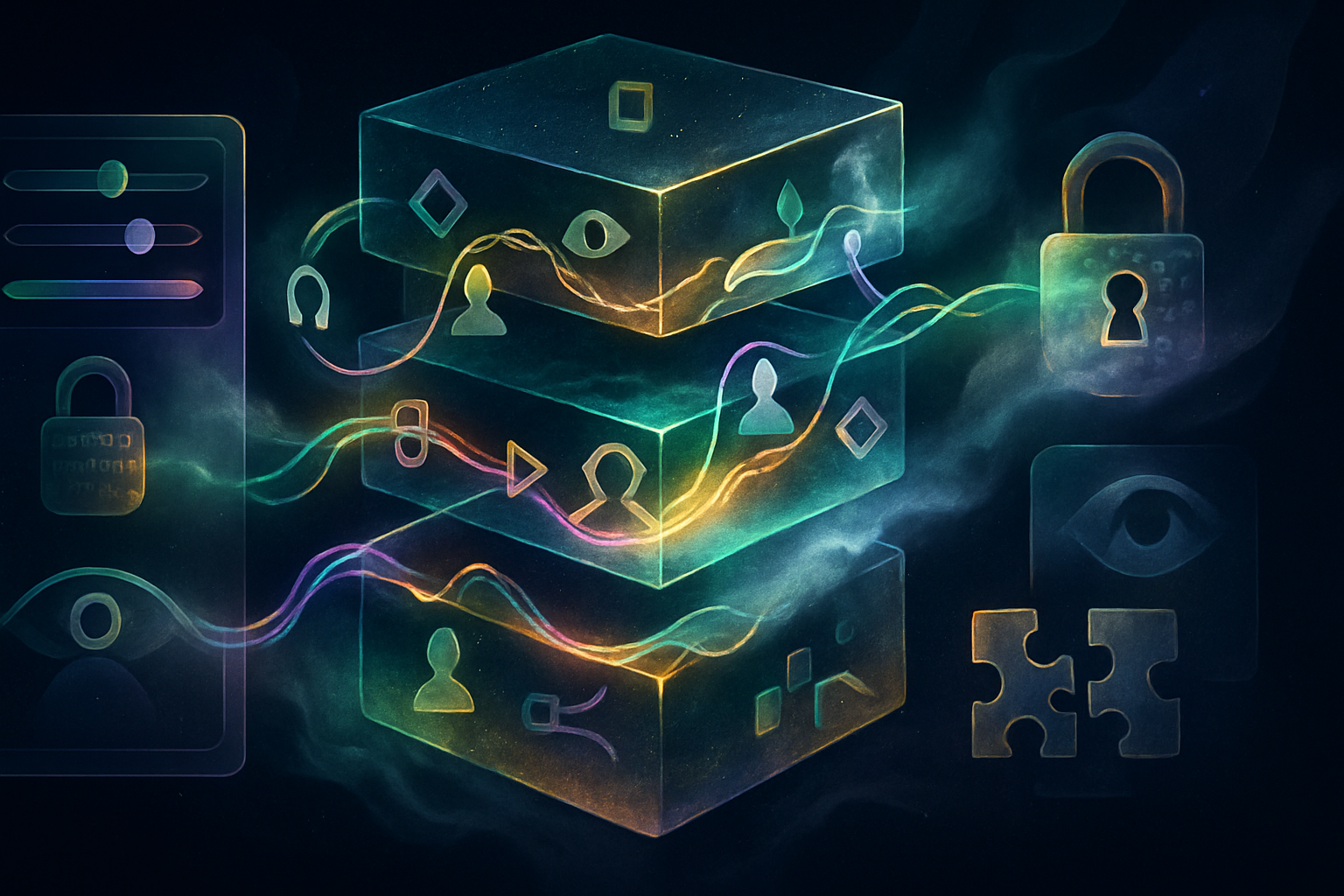
Programmable Privacy in DeFi: How Next-Gen Zero-Knowledge Protocols Are Powering Confidential Transactions, Private DEXs, and New Revenue Models Right Now
Privacy in decentralized finance has always felt like a black-and-white choice: stay in the open, or go underground. For years, “privacy coins” like Monero or Zcash offered a refuge for those seeking confidentiality, but integrating that level of privacy into the fast-moving, composable world of DeFi seemed out of reach. Blockchains, by design, are public ledgers—every trade, every loan, every NFT bid, visible for all to see.
Lately, though, that binary is breaking apart. A new wave of zero-knowledge (ZK) protocols is bringing programmable privacy into the heart of DeFi, letting users and applications tailor what they reveal, to whom, and when. Private DEXs, confidential lending, and even “privacy as a service” layers are moving from whitepaper to mainnet. This isn’t just tech for the paranoid—it’s practical infrastructure for traders, DAO treasuries, institutional players, and anyone who wants more control over their financial footprint.
The stakes are enormous. On one hand, programmable privacy could open DeFi to mainstream finance and protect users from front-running or targeted attacks. On the other, it challenges regulators, dapp builders, and users to rethink risk, compliance, and how open a truly open system should be.
Let’s unpack how programmable privacy is reshaping DeFi right now, what’s powering it under the hood, and what it means for the next generation of digital finance.
Privacy in DeFi: A Brief Background
Blockchains were designed to be transparent. Bitcoin’s ledger is public, and Ethereum’s smart contracts execute in the open for anyone to audit. This radical transparency built trust in code, but it came with a trade-off: anyone can trace wallets, see transactions, and—if they know an address—follow the financial life of an individual, DAO, or company.
Early privacy solutions in crypto focused on obfuscation. Coins like Monero and Zcash use advanced cryptography (ring signatures, zk-SNARKs) to conceal sender, receiver, and amount. But these tools mostly operated outside the composable world of DeFi. Meanwhile, mixers like Tornado Cash came under regulatory fire, and privacy’s reputation suffered amid concerns about money laundering and illicit finance.
Enter zero-knowledge proofs (ZKPs)—mathematical methods that let someone prove a statement is true without revealing the underlying data. Over the past two years, ZKPs have gone from theoretical to practical, thanks to efficiency gains and new circuit designs. Now, they’re being used not just to scale blockchains, but to enable fine-grained, programmable privacy for DeFi protocols.
The Nuts and Bolts: How Programmable Privacy Works
What Are Zero-Knowledge Proofs?
At its core, a zero-knowledge proof lets you convince someone you know a secret, without revealing the secret itself. In blockchain, this unlocks the ability to prove a transaction is valid—balances check out, no double-spending—without exposing the who, what, and how much.
Two major ZK technologies are powering this shift:
- zk-SNARKs (Zero-Knowledge Succinct Non-Interactive Argument of Knowledge): Efficient, small proofs ideal for on-chain verification.
- zk-STARKs (Zero-Knowledge Scalable Transparent ARguments of Knowledge): Similar, but even more scalable and transparent, with no need for a trusted setup.
Both let developers build smart contracts that execute logic privately, with customizable disclosure: a transaction can be fully private, partially private, or selectively visible based on rules set in code.
Programmable Privacy: More Than Just Hiding Balances
Programmable privacy means privacy isn’t “all or nothing.” Protocols can define what gets hidden, what gets revealed, and under what conditions:
- Selective disclosure: Traders can prove compliance with KYC/AML without revealing their wallet activity.
- Private order books: DEXs can match trades without leaking bids and offers to the mempool, defeating front-runners.
- Confidential DeFi: DAOs can pay contributors or rebalance treasuries without broadcasting every move to competitors.
All of this is possible thanks to ZK circuits that encode business logic and privacy policies directly into smart contracts.
Real-World Examples: Private DEXs, Confidential Lending, and Beyond
The past year has seen several projects bring programmable privacy to life, not just as experiments but as functioning products:
Aztec Network: Private DeFi on Ethereum
Aztec has pioneered “zk.money,” a privacy layer for Ethereum that lets users send funds, trade, and interact with DeFi protocols confidentially. Using zk-SNARKs, Aztec shields transaction details, while still letting users prove validity to the Ethereum base layer. As of mid-2024, Aztec has processed over $100 million in private DeFi transactions, including private swaps, lending, and donations.
Railgun: Shielded Transactions for Power Users
Railgun integrates with existing DeFi apps, letting users make shielded trades on Uniswap or provide liquidity without revealing wallet addresses. It supports cross-chain privacy and has seen usage from both retail and institutional traders seeking to protect strategies from copy-trading and MEV bots.
Elusiv and Manta: Privacy for Solana and Polkadot
Elusiv brings ZK privacy to Solana, letting users send SPL tokens confidentially, while Manta Network offers private swaps and DeFi primitives on Polkadot. Both use ZKPs to enable compliance-friendly privacy—users can prove they’re not on sanctions lists without revealing their identity or transactions.
Private Auctions and DAOs
Protocols like Semaphore and MACI (Minimal Anti-Collusion Infrastructure) are enabling private voting, governance, and even sealed-bid auctions—allowing DAOs to make strategic decisions or allocate grants without exposing votes to manipulation.
Data Point: Adoption and Activity
Private DeFi remains a niche but fast-growing field. According to Messari estimates, privacy-oriented DeFi protocols held between $150-$250 million in TVL (total value locked) as of Q2 2024—a small slice compared to open DeFi, but up nearly 3x from a year prior. Usage is concentrated among sophisticated traders, DAOs, and early institutional pilots.
Why It Matters: Implications for Users, Markets, and Builders
Protecting Traders and DAOs
In public DeFi, savvy actors scan the mempool for large trades or DAO treasury moves, then front-run or copycat for profit. Programmable privacy breaks this cycle, letting users protect alpha and DAOs execute strategies discreetly.
Unlocking Institutional Use
Financial institutions, family offices, and even fintech startups have been wary of DeFi due to its radical transparency—few want to expose their flows to global competitors or risk customer privacy. ZK-powered privacy removes a key blocker, making it possible to meet compliance needs without oversharing.
New Revenue Models
Private DeFi isn’t just about hiding—it’s about creating new types of services:
- Privacy as a service: Protocols can charge fees for confidential transactions or shielded asset management.
- Selective compliance: Users can pay for “proofs” of compliance, enabling cross-border DeFi without full KYC.
- Private marketplaces: Auctions, lending, and asset swaps can be structured to protect bidder or counterparty confidentiality, opening new segments for high-value or illiquid assets.
Risks, Limitations, and Trade-Offs
No technology is a silver bullet. Programmable privacy introduces new risks and doesn’t erase old ones.
Technical and Economic Risks
- Complexity and bugs: ZK circuits are harder to audit than regular smart contracts. Mistakes can lead to undetectable exploits or broken privacy guarantees.
- Performance: Generating and verifying ZK proofs, while improving, is still slower and more resource-intensive than plain transactions—though networks like Scroll and Starknet are closing the gap.
- Liquidity fragmentation: Private pools may fragment liquidity, making price discovery and arbitrage less efficient.
Regulatory and Compliance Challenges
- Legal uncertainty: Regulators are still coming to grips with privacy in DeFi. Tools like Tornado Cash have drawn sanctions. Protocols that enable privacy while facilitating illicit finance may face legal action, even if designed for legitimate use.
- Selective disclosure and law enforcement: The ability to “selectively disclose” may satisfy some regulators, but the burden is on protocols to prove they can meet compliance requirements when needed.
User Risks
- Loss of transparency: Privacy can hide bad actor behavior as well as good. Users need new tools and norms to assess protocol safety.
- Censorship: Centralized RPC providers or bridges may refuse to relay private transactions, effectively censoring users.
Concrete Steps: What Should You Do If You’re a Trader, Builder, or Investor?
For Traders
- Assess your needs: Are you worried about front-running, copy trading, or revealing wallet balances? Consider using privacy layers like Aztec or Railgun for sensitive transactions.
- Check liquidity and costs: Private pools may have less liquidity and higher fees. Test with small amounts before making large trades.
- Stay informed: Regulatory scrutiny is high; keep an eye on announcements from protocol teams and your jurisdiction.
For Builders
- Prioritize security audits: ZK circuits need rigorous review. Work with specialized firms and open-source your code when possible.
- Design for compliance: Build in hooks for selective disclosure, enabling users to prove legitimacy without full doxxing.
- Educate your users: Privacy tools are new to most DeFi users. Offer clear docs, explain trade-offs, and highlight risks.
For Investors
- Evaluate protocol resilience: Is the privacy tech mature? Are there trusted audit reports and active bug bounties?
- Watch regulatory signals: Track how regulators respond to privacy DeFi. Early movers may face hurdles, but protocols that navigate compliance could gain outsized market share.
- Diversify exposure: Don’t bet the farm on a single privacy protocol; the field is evolving fast.
For Policymakers
- Engage with builders: Encourage open dialogue with privacy protocol teams to understand their approach to compliance and auditability.
- Balance innovation and risk: Overly broad bans may drive privacy innovation offshore. Focus on targeted, risk-based regulation.
The Road Ahead: What to Expect in the Next 12–24 Months
Programmable privacy in DeFi is moving from the margins to the mainstream. As ZK proof systems get faster and cheaper, expect to see:
- Mainstream DEXs rolling out private trading modes: Not just niche protocols, but major players adding privacy layers.
- Compliant privacy rails: Protocols offering “privacy with proof”—letting users demonstrate compliance without full transparency.
- Hybrid models and modular stacks: Privacy as an opt-in layer, composable with other DeFi tools, not a separate ecosystem.
- Growing regulatory engagement: Expect more guidance (and possibly enforcement) from global regulators, especially as institutional adoption grows.
The balance between privacy, compliance, and openness is still being struck. But one thing is clear: the age of programmable privacy is here, and it’s reshaping not just how we transact, but who can participate in the next era of digital finance.
For traders, builders, and investors, the key is to stay informed, experiment judiciously, and recognize that in DeFi, the line between public and private is no longer a simple switch—it’s programmable, and the possibilities are just starting to unfold.
What to Do Next
- Save this guide and revisit it during your next allocation decision.
- Cross-check key metrics with public dashboards.
- Share with your team and define one execution step this week.
Recommended Next Reads
- Zero-Knowledge Proofs Explained:
zero-knowledge-proofs-explained - How Private DEXs Work:
private-dexs-guide - DeFi Revenue Models:
defi-revenue-models
Sources and Further Reading
- Electric Coin Company (Zcash) – What Are Zero-Knowledge Proofs?
- Aztec Network – Programmable Privacy for Ethereum
- Vitalik Buterin on Privacy Pools
FAQ
What is programmable privacy in DeFi?
Programmable privacy in DeFi refers to the ability to customize and control what financial data is kept private or made public on decentralized finance platforms, using advanced cryptographic tools like zero-knowledge proofs. This allows users to selectively reveal information, enabling confidential transactions and private trading without sacrificing transparency or compliance.
How do zero-knowledge protocols enable confidential transactions in DeFi?
Zero-knowledge protocols allow users to prove the validity of a transaction without revealing underlying details, such as amounts or addresses. In DeFi, this means trades, loans, or swaps can be executed privately, with only necessary information disclosed, thus protecting user privacy while maintaining security and auditability.
What new revenue models are emerging from programmable privacy in DeFi?
Programmable privacy enables new revenue models such as privacy-as-a-service, premium private trading features, and confidential lending platforms. These models attract institutional and retail users seeking enhanced privacy, and allow DeFi protocols to monetize privacy features or offer tiered services based on confidentiality needs.
Stay Updated
Subscribe to your site newsletter for weekly market breakdowns, tool comparisons, and risk alerts.
Leave a Reply