
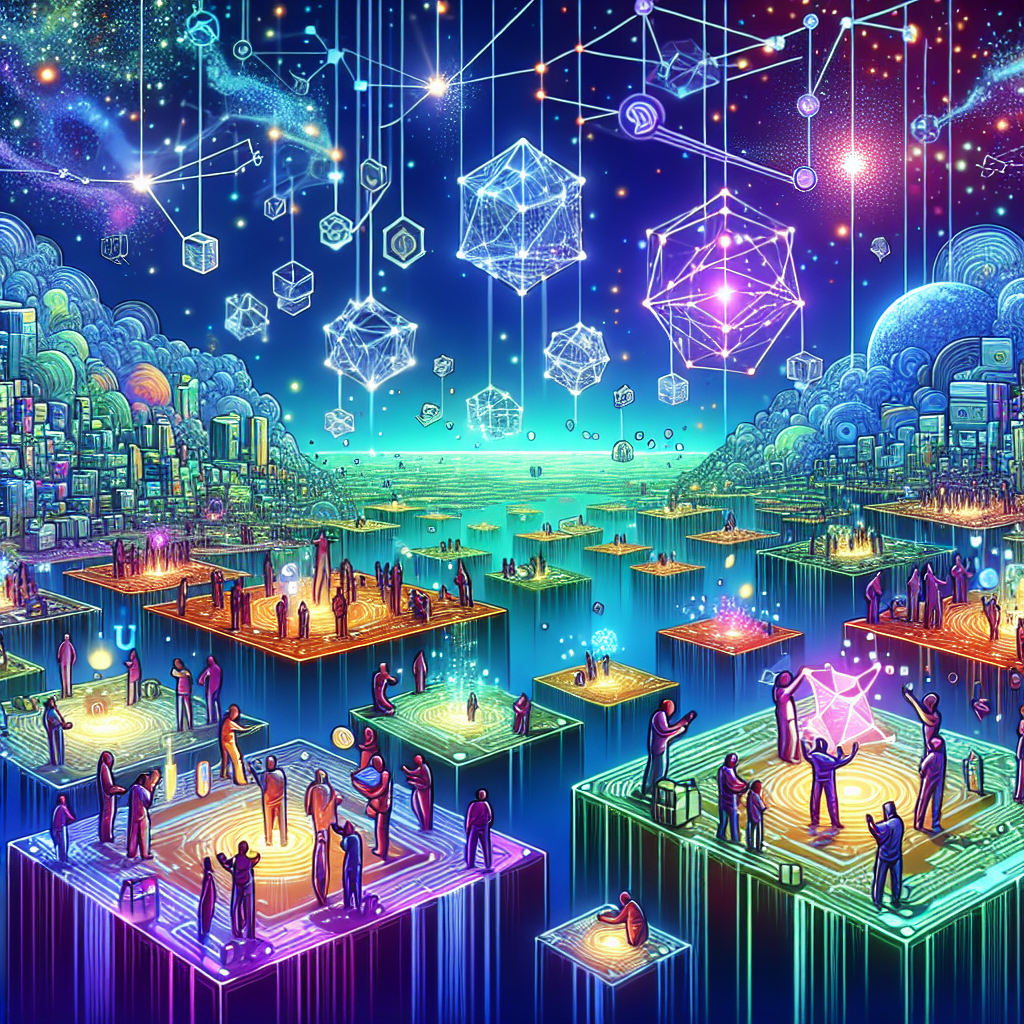
Scaling the Virtual Frontier: How Blockchain-Powered Metaverse SDKs Are Crowdsourcing Immersive Worlds and Fueling Open-Economy Game Creation Today
When you step into a virtual world today, you’re likely standing on the shoulders of thousands—sometimes millions—of creators. But who gets to build these worlds, and who gets rewarded? For decades, the answer was: whoever owned the platform. The rest of us could only play, rarely shape, and almost never profit.
That’s changing fast. A new generation of metaverse software development kits (SDKs), built on blockchain rails, is letting anyone with a vision and some coding chops contribute to collective virtual spaces. It’s not just about gaming: it’s about open digital economies, co-owned worlds, and new jobs that didn’t exist five years ago.
This isn’t theoretical. Already, creators are earning real income from virtual assets, custom levels, and even in-world services. Investors are pouring in billions, major studios are watching closely, and policymakers are scrambling to catch up. The stakes: who will own and shape the next version of the internet—and how fair, open, and innovative it will be.
Let’s break down what’s happening on the frontier of crowdsourced virtual world-building, why blockchain is the game-changer, and what it all means for creators, gamers, investors, and anyone who cares about digital ownership and opportunity.
From Walled Gardens to Open Frontiers: How We Got Here
To understand this shift, it helps to look at where we started. For most of gaming and virtual world history, “user-generated content” meant modding—players hacking together new maps or items, often with little support or reward. Platforms like Roblox and Minecraft changed that by making world-building accessible and even monetizable, but they’re still closed ecosystems: creators depend on a central authority, who can set fees, change policies, or even ban users at will.
Enter blockchain: a technology designed for distributed ownership and transparent transactions. In the late 2010s, the first blockchain-based worlds (think Decentraland or Cryptovoxels) let users truly own land and items as NFTs. But building on these early platforms was clunky, and their “economies” were often more hype than substance.
The next leap is happening now: blockchain-powered metaverse SDKs. These are toolkits—often open-source, sometimes plug-and-play—that let anyone build, deploy, and monetize experiences, assets, and even whole worlds atop decentralized infrastructure. Crucially, they embed open-economy logic from day one: assets are tradable, rules are transparent, and creators get a cut when their work is used or resold. This is more than a new way to make games—it’s a new way to crowdsource the very fabric of digital reality.
The Nuts and Bolts: How Blockchain Metaverse SDKs Work
At their core, blockchain metaverse SDKs are just like any other toolkit: they provide libraries, APIs, and templates to help developers build immersive experiences. The twist is in how they handle ownership, value, and interoperability.
Here’s what sets these SDKs apart:
- On-chain asset management: Items, avatars, land parcels, and even game logic can be represented as NFTs or smart contracts. That means users really own their creations, can sell or trade them, and can use them across compatible worlds.
- Permissionless deployment: Anyone can build and deploy a new experience, often without needing approval from a central authority. This opens the door to rapid experimentation and niche communities.
- Programmable economies: SDKs often include modules for creating custom tokens, marketplaces, and game economies—baked into the code, not tacked on as an afterthought.
- Interoperability: Some SDKs are designed to let assets and avatars move between worlds or games, using open standards and shared protocols.
- Incentive alignment: Built-in royalty systems ensure creators get paid when their work is resold or reused, not just at the initial sale.
The result: a toolkit not just for building games, but for spinning up entire economies and communities—without asking permission from a gatekeeper.
Who’s Building, Who’s Playing: Real-World Examples and Data
This isn’t just a theoretical shift—it’s happening in live projects right now. Let’s look at a few leading examples and the numbers behind them.
Decentraland (MANA)
- Background: One of the first blockchain metaverse platforms, Decentraland lets users buy virtual land as NFTs, build on it using their SDK, and monetize experiences.
- Economy: As of early 2024, secondary sales of LAND NFTs have totaled more than $500 million since launch, with thousands of unique creators active.
- Ecosystem: Dozens of third-party mini-games, NFT galleries, and even virtual casinos have been built using the Decentraland SDK.
The Sandbox
- Background: The Sandbox provides a voxel-based universe with a robust SDK, letting users create assets, games, and interactive experiences.
- Economy: Over 23,000 LAND owners, and more than 800,000 registered wallets. The SAND token has seen daily trading volumes in the tens of millions of dollars on major exchanges.
- Creator royalties: Asset creators earn a share every time their NFTs are resold or used in new games, with some top creators reportedly earning six figures annually.
Webaverse and Open Metaverse Standards
- Background: Webaverse is focused on open-source, interoperable metaverse SDKs, with assets and avatars that work across multiple worlds.
- Experimentation: Hundreds of indie projects have used Webaverse’s stack to launch custom games or social spaces, often running in the browser.
- Open standards: The Open Metaverse Interoperability Group is pushing for shared protocols, so assets and economies aren’t locked to one platform.
Crowdsourced World-Building In Action
- NFT Worlds: This project lets users buy NFT-backed land and build custom experiences using Minecraft-compatible SDKs. Worlds often host hundreds of players, and creators can charge for access, custom items, or in-world events.
- Data point: In 2022–2023, some NFT World owners were earning several thousand dollars per month in rental income or access fees, though earnings have since fluctuated with broader NFT market cycles.
Why It Matters Now: The Convergence of Technology, Economics, and Culture
So why is this shift happening now, and why should you care?
- Mainstreaming of blockchain wallets: With tens of millions of non-custodial wallets in use, onboarding to blockchain metaverses is finally easier for regular users.
- Maturing developer tools: SDKs today are far more user-friendly than even two years ago; drag-and-drop interfaces and no-code/low-code options are opening the door to non-technical creators.
- Economic opportunity: As in-game assets and experiences become liquid and tradable, new jobs and business models are emerging—think virtual architects, event planners, and asset designers.
- Cultural appetite: As younger generations spend more time socializing and working in digital spaces, demand for customizable, co-owned worlds is surging.
- Platform risk: Recent controversies (e.g., Roblox’s revenue cuts, Epic’s policy changes) are pushing creators toward platforms where they control their economic destiny.
In short: the stars are aligning for a new, more open metaverse—and blockchain SDKs are the toolboxes.
The Risks and Trade-Offs: Not All That Glitters Is Gold
For all their promise, blockchain-powered metaverse SDKs come with a tangle of risks, limitations, and unanswered questions. Here’s what builders, users, and investors should keep top-of-mind:
Technical Trade-Offs
- Scalability: On-chain assets and logic can be slow and expensive to transact, especially on congested blockchains. Layer-2 solutions and sidechains help, but add complexity.
- Interoperability gaps: True cross-world asset portability is still mostly a vision; real standards are just emerging, and many projects use incompatible formats.
- User experience: Managing wallets, dealing with gas fees, and recovering lost keys are still pain points for mainstream users.
Economic and Governance Risks
- Speculation vs. utility: In some worlds, land and asset prices are driven more by hype than actual usage, risking bubbles and disillusionment.
- Creator royalties and fragmentation: While programmable royalties protect creators, they can also fragment marketplaces and reduce liquidity if platforms compete on royalty fees.
- Governance capture: Decentralized worlds can still be dominated by early adopters or whales, leading to new forms of concentration.
Regulatory and Legal Hazards
- Uncertain legal status: Are in-game tokens securities? Are virtual land sales subject to real estate or gambling laws? Regulators are still figuring it out.
- Intellectual property disputes: Crowdsourced world-building can lead to copyright conflicts, especially when remixing or importing assets.
- KYC/AML compliance: Open-economy SDKs may be targeted by regulators seeking to enforce anti-money laundering and identity rules.
User Risks
- Security: Hacks, rug pulls, and phishing remain common in NFT and DeFi-powered games.
- Exclusion: High entry prices for land or assets can lock out new creators, undermining the promise of openness.
- Digital permanence: Unlike traditional games, blockchain assets can’t be easily “deleted” or reversed if something goes wrong.
Concrete Steps: Practical Advice for Builders, Investors, and Policymakers
If you’re thinking of stepping into this space—whether as a creator, investor, or policymaker—here’s a practical checklist to help you navigate the landscape.
For Builders and Creators
- Choose your SDK wisely: Evaluate not just features, but the openness, community support, and interoperability of the SDK you pick.
- Prioritize user experience: Hide blockchain complexity wherever possible; consider social logins, fiat onramps, and robust customer support.
- Plan for royalties and secondary sales: Understand how (and where) your creations will be traded, and what cut you’ll receive.
- Stay on top of open standards: The interoperability landscape is shifting fast—build with portable formats and composability in mind.
For Investors
- Look past hype: Scrutinize real user activity, creator earnings, and the health of in-world economies—not just token prices or NFT sales.
- Assess governance models: Who really controls the platform? Is there genuine community input, or just token-weighted votes dominated by whales?
- Diversify across platforms: The metaverse is not winner-take-all; invest across multiple SDKs and ecosystems to hedge risk.
For Policymakers and Regulators
- Engage early: Work with builders to develop clear, fair guidelines before problems arise. Understand the difference between open protocols and centralized storefronts.
- Focus on consumer protection: Prioritize security, transparency, and dispute resolution for users—especially around asset custody and fraud.
- Support open standards: Encourage the development and adoption of interoperability frameworks, to avoid new digital walled gardens.
The Road Ahead: What the Next 12–24 Months May Hold
If the last two years were about proving that blockchain metaverse SDKs could work, the next stretch will be about scale and maturity. Expect to see:
- Major new entrants: Traditional game studios and tech giants are increasingly eyeing open-economy SDKs, either through partnerships or their own initiatives.
- Interoperability breakthroughs: We may finally see the first seamless cross-world asset transfers, driven by open standards groups and technical advances.
- Regulatory movement: Expect more clarity—and possibly crackdowns—around NFT economies, royalties, and governance.
- New creator classes: As tools get easier and onboarding smooths out, expect a wave of non-technical creators and small businesses entering the space.
But the most important change may be cultural: a growing recognition that virtual spaces can be as real, valuable, and worth co-owning as anything in the physical world. The crowdsourced, blockchain-powered metaverse is no longer speculation—it’s the new frontier. Whether you’re building, investing, or just exploring, now is the time to stake your claim.
Leave a Reply