
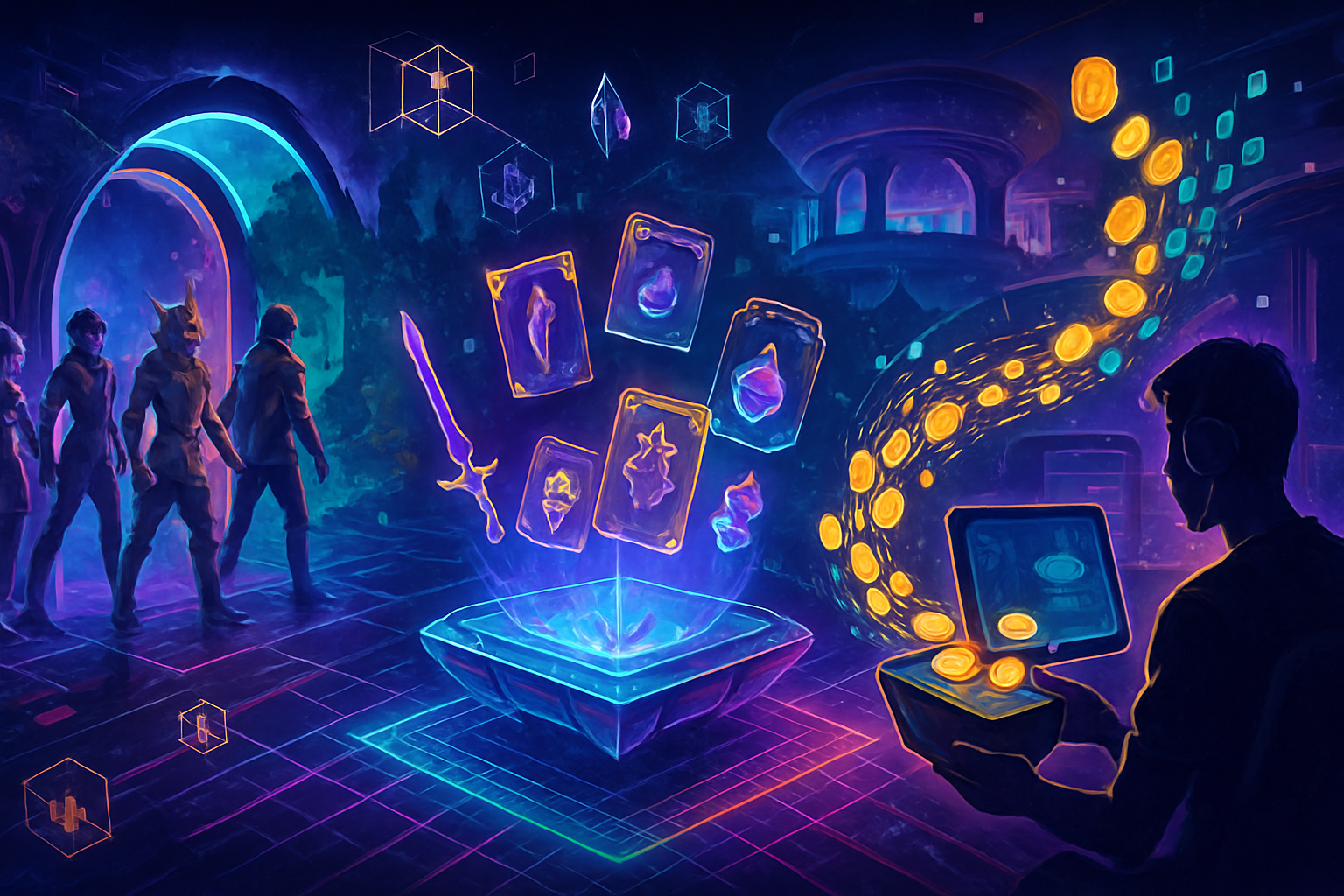
Behind the Boom in NFT-Based Gaming Assets: How Web3 Marketplaces, Interoperable Avatars, and Tokenized In-Game Economies Are Creating New Revenue Models for Gamers and Developers Right Now
If you’ve spent any time browsing gaming news or crypto Twitter this year, you’ve likely seen the headlines: digital swords selling for thousands, indie developers raking in revenue from NFT drops, and a new breed of gamers earning real money just by playing. The world of in-game items—once walled off in centralized databases, controlled solely by game publishers—is being upended by a wave of blockchain-based innovation.
At the heart of this shift are NFTs (non-fungible tokens): unique digital assets that can represent anything from a rare Fortnite skin to a customizable avatar in a metaverse. As game studios experiment with Web3 tech, new marketplaces and interoperable avatars are giving players actual property rights—allowing them to trade, sell, or use their digital loot across different games and platforms. The result? A growing economy where both players and developers can share in the upside.
But this isn’t just hype or a fleeting trend. Billions of dollars are changing hands, venture capital is pouring in, and regulators are beginning to take notice. The stakes are high for everyone: gamers, game studios, marketplaces, and even policymakers tasked with keeping the system fair. Understanding how this all works—what’s possible, what’s risky, and what’s next—is essential for anyone who cares about the intersection of gaming, technology, and finance.
Let’s break down the mechanics behind the NFT gaming boom, examine real-world examples, and cut through the noise to give players, builders, and investors the insights they need right now.
The Rise of NFT Gaming: A Quick Primer
NFTs first shot to mainstream attention in 2021, with headlines about $69 million digital art sales and celebrity-endorsed collectibles. But the roots of NFT gaming go back further. For years, gamers have bought, sold, and coveted digital goods—think World of Warcraft gold, Counter-Strike skins, or FIFA Ultimate Team cards. The twist with NFTs? Blockchain technology makes it possible to truly own, transfer, and monetize these assets outside any single game’s ecosystem.
In traditional games, in-game items are locked to your account—valuable only as long as the publisher allows. NFT-based assets, by contrast, are recorded on decentralized ledgers (like Ethereum or Polygon), enabling true digital ownership. Players can trade on open marketplaces, use items across compatible games, or even “rent” out their digital gear for passive income.
The first blockbuster NFT game, Axie Infinity, proved the concept in 2021. At its peak, players were earning thousands per month in SLP tokens, with total in-game asset sales surpassing $4 billion. While the initial frenzy cooled, the infrastructure and ideas stuck. Today, dozens of studios—from indie developers to giants like Ubisoft—are launching or experimenting with NFT-enabled games.
How Web3 Marketplaces and Interoperable Avatars Are Transforming Gaming
Open Marketplaces: Liquidity for Digital Goods
A key innovation powering the NFT gaming boom is the rise of open, blockchain-based marketplaces. Unlike closed systems like Steam’s Marketplace or Blizzard’s Auction House, NFT marketplaces (OpenSea, Blur, Magic Eden, and game-specific platforms) let anyone list, buy, or sell in-game assets with minimal friction.
Why it matters:
– True liquidity: Players can trade gear, skins, or land for crypto or fiat, not just in-game currency.
– Price discovery: Assets find a real-world value, set by market demand.
– New revenue for developers: Studios can capture royalties on every secondary sale, unlocking ongoing income streams.
According to DappRadar, NFT gaming assets accounted for over $2.9 billion in trading volume in 2023, with some platforms reporting millions of transactions monthly.
Interoperable Avatars and Items: The “Metaverse” in Practice
Another breakthrough is interoperability—the idea that your NFT avatar, skin, or item isn’t stuck in one game, but can travel across multiple worlds or platforms.
How does it work?
– Avatars and items are minted as NFTs following shared technical standards (like ERC-721 or ERC-1155).
– Partner games or platforms agree to “read” these NFTs and render compatible versions in their own environments.
– Players can take a sword from Game A and wield it in Game B, or use the same avatar across different social spaces.
While true interoperability is still in early stages, several projects are making headway:
– Ready Player Me: Lets users create NFT avatars usable in 9,000+ supported games and apps.
– Yuga Labs’ Otherside: Promises cross-metaverse compatibility for NFTs like Bored Apes and Meebits.
– The Sandbox & Decentraland: Both allow NFT wearables and land to be deployed across different experiences.
The upshot: players gain lasting value and identity, while developers can tap into larger, engaged user bases.
Tokenized In-Game Economies: Play-to-Earn and Beyond
NFTs open the door to economies where players aren’t just spending money, but earning it. This is the “play-to-earn” model popularized by games like Axie Infinity, Sorare, and newer titles like Illuvium and Pixels.
How it works:
– Players receive in-game tokens (fungible or non-fungible) for completing tasks, winning battles, or contributing to the ecosystem.
– These tokens can often be traded for other crypto or fiat, or used to access special content.
– Developers can build in mechanisms like staking, renting, or “breeding” assets to create new revenue flows.
Importantly, the model is evolving. Many new games are shifting to “play-and-own” or “play-and-earn,” focusing more on asset ownership and sustainable economies rather than pure speculation.
Real-World Examples: Who’s Winning (and How)?
To understand the practical impact, let’s look at a few standout projects and their numbers:
1. Axie Infinity
- At its 2021 peak, Axie boasted over 2.7 million daily active users.
- Lifetime NFT trading volume exceeded $4.2 billion, per CryptoSlam.
- Some players in the Philippines and Venezuela reported earning more than local minimum wages during the boom, though earnings have since dropped.
2. Sorare
- A fantasy sports game using NFT player cards licensed from top leagues (e.g., Premier League, MLB).
- Over $700 million in total NFT sales since 2019.
- Active partnerships with over 300 sports organizations.
3. Parallel
- A sci-fi trading card game where every card is an NFT.
- Raised $50 million in venture funding in 2023.
- Early rare cards have traded for thousands of dollars.
4. Immutable X
- A Layer 2 platform purpose-built for NFT gaming.
- Hosts games like Gods Unchained and Illuvium, with over 100 projects launched or building.
- Claims over 50 million NFT mints with zero gas fees for users.
5. Ubisoft’s Quartz
- Ubisoft became the first major publisher to launch in-game NFTs in Ghost Recon Breakpoint.
- Uptake was mixed, but it marked a significant mainstream test of the model.
Key takeaway: While the biggest windfalls have gone to early adopters and speculators, new platforms and more sustainable models are emerging, with both players and developers capturing value.
Risks, Limitations, and Trade-Offs
The NFT gaming gold rush isn’t without pitfalls. Here’s what every participant should keep in mind:
Technical and Economic Risks
- Volatility: In-game asset prices can swing wildly, making it risky to “invest” in rare items.
- Speculation vs. Utility: Many NFT games have struggled to balance fun gameplay with economic incentives, leading to “ponzinomics” and unsustainable bubbles.
- Interoperability Gaps: True cross-game compatibility is still rare, requiring technical alignment and business cooperation.
- Security: Smart contract bugs, wallet hacks, and phishing attacks remain real threats.
Regulatory and Legal Uncertainty
- Securities Laws: Some in-game tokens may be classified as securities in certain jurisdictions, triggering complex compliance requirements.
- Gambling Concerns: Play-to-earn and loot box mechanics can blur legal lines, especially for minors.
- Asset Ownership Rights: Not all NFTs confer true property rights; terms of service may limit resale or usage.
User Experience and Adoption Barriers
- Onboarding Complexity: Setting up wallets, buying crypto, and navigating marketplaces can be daunting for newcomers.
- Environmental Impact: While many blockchains are moving to proof-of-stake models, energy use remains a concern in some quarters.
- FOMO and Scams: The hype attracts bad actors, from rug pulls to pump-and-dump schemes.
Bottom line: The technology is promising, but far from risk-free. Due diligence and a healthy dose of skepticism are essential.
Practical Steps and Advice: For Gamers, Developers, Investors, and Policymakers
For Gamers and Traders
- Start Small: Don’t spend more than you can afford to lose. Treat in-game NFTs as entertainment, not investments.
- Research Projects: Look for games with active communities, transparent teams, and sustainable economic models.
- Secure Your Assets: Use hardware wallets and enable two-factor authentication on all accounts.
- Understand Terms: Read the fine print—does your NFT confer true ownership, or just a license?
For Developers and Builders
- Prioritize Gameplay: Focus on fun and retention, not just tokenomics.
- Design for Longevity: Avoid unsustainable “hyper-ponzi” reward loops. Build in sinks, scarcity, and ways for assets to retain long-term value.
- Embrace Open Standards: Use widely adopted NFT protocols to maximize interoperability.
- Plan for Regulation: Consult legal experts early to navigate securities, gambling, and consumer protection laws.
For Investors
- Diversify: The sector is volatile. Don’t concentrate capital in a single game or platform.
- Vet Teams and Backers: Favor projects with experienced developers and reputable investors.
- Monitor Metrics: Track real user activity (daily active wallets, transactions) versus hype and Twitter followers.
- Prepare for Volatility: Prices can spike and crash rapidly; have an exit strategy.
For Policymakers
- Engage Early: Don’t wait for crises. Work with industry to understand new models and risks.
- Balance Innovation and Protection: Overregulation could stifle creativity, but clear rules are needed to prevent abuse.
- Educate the Public: Help consumers understand the risks and rights around digital asset ownership.
The Next 12–24 Months: Where Is NFT Gaming Headed?
NFT gaming is no longer a sci-fi fantasy or niche experiment—it’s a rapidly maturing sector with real money, talent, and attention at stake. Over the next two years, here’s what could unfold:
- Consolidation: Expect fewer, higher-quality games as unsustainable projects fade and established studios enter the space.
- Better User Experience: Mainstream wallets, fiat onramps, and seamless onboarding will lower the barrier for new players.
- Interoperability Advances: More partnerships and open standards could make the “metaverse” vision of cross-game assets a reality for select items and avatars.
- Regulatory Clarity: New guidance from the US, EU, and Asia will clarify what’s allowed—and what isn’t.
- New Revenue Models: Look for hybrids of free-to-play, play-and-own, and creator-driven economies, with more equitable value sharing between players and developers.
In short, the line between gamer and entrepreneur is blurring fast. Whether you’re logging in to compete, build, or invest, the NFT gaming ecosystem offers new opportunities—and new risks—unlike anything the industry has seen before. The smartest players, both literal and figurative, will be those who dig deeper, ask hard questions, and stay nimble as this next chapter unfolds.
What to Do Next
- Compare 2-3 relevant tools before choosing one.
- Validate fees, custody model, and jurisdiction support.
- Start small and track performance weekly.
Recommended Next Reads
- NFT gaming explained:
/nft-gaming-explained - How to trade NFTs safely:
/how-to-trade-nfts-safely - Web3 and the future of gaming:
/web3-future-gaming
Sources and Further Reading
- DappRadar: Blockchain Game Report
- CoinDesk: NFT Gaming Market Analysis
- VentureBeat: How Web3 is transforming gaming
FAQ
What are NFT-based gaming assets?
NFT-based gaming assets are unique digital items, such as skins, weapons, or avatars, that are represented as non-fungible tokens (NFTs) on a blockchain. These assets can be owned, traded, or sold by players, giving them true ownership and control over their in-game items.
How do Web3 marketplaces benefit gamers and developers?
Web3 marketplaces allow gamers to buy, sell, and trade NFT-based assets securely and transparently. Developers benefit by earning royalties on secondary sales and can create new revenue streams through limited edition drops and in-game economies powered by blockchain technology.
What is the significance of interoperable avatars in gaming?
Interoperable avatars are digital characters that can be used across multiple games and platforms, thanks to blockchain standards. This increases the value and utility of in-game assets, as players can carry their customized avatars and items between different virtual worlds.
Stay Updated
Subscribe to your site newsletter for weekly market breakdowns, tool comparisons, and risk alerts.
Leave a Reply