
How Crypto-Powered Gaming Guilds Are Rewriting Web3 Monetization Models
The New Power Players in Web3 Gaming
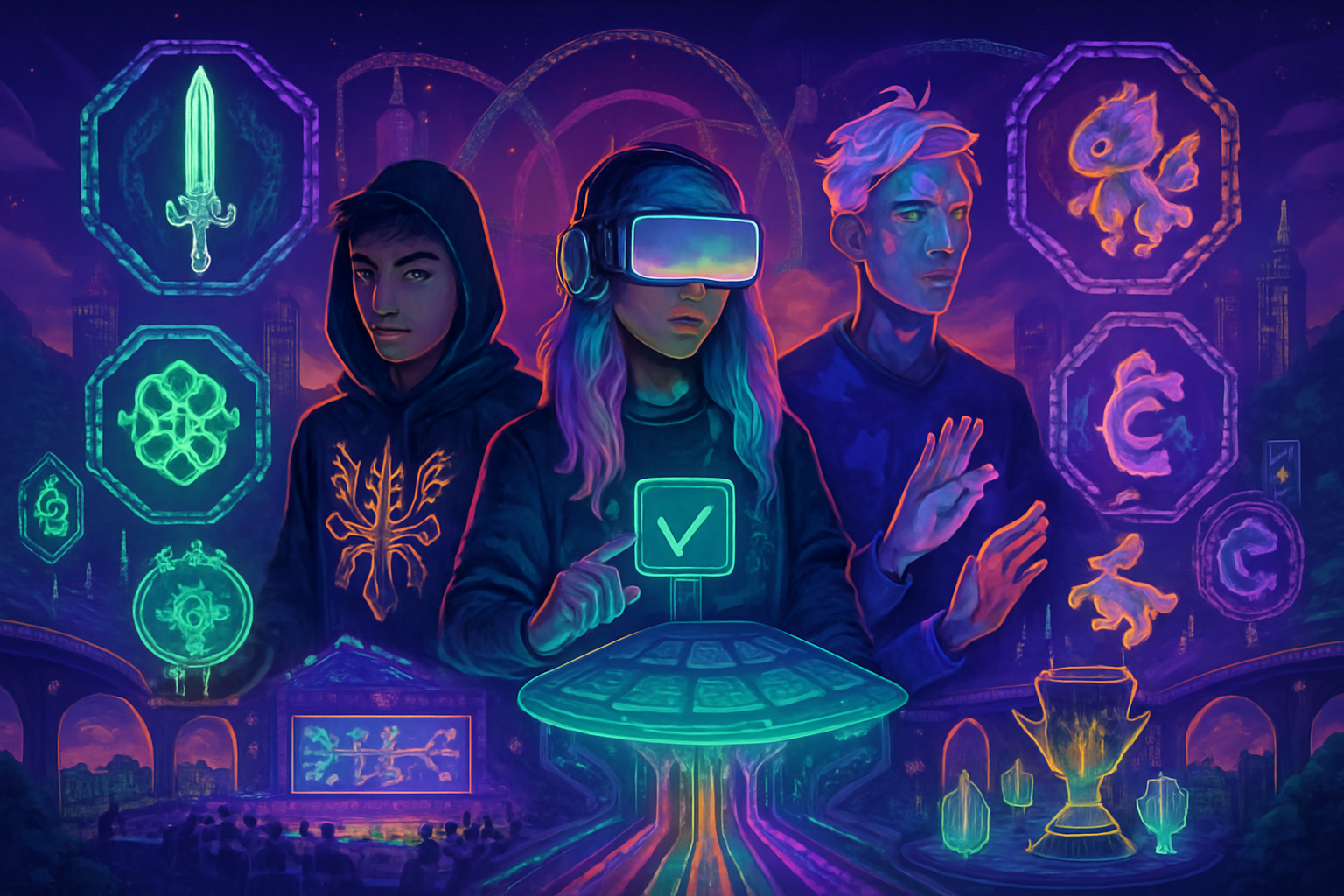
Picture a teenage gamer in Manila, a streamer in São Paulo, and a retired esports pro in Berlin—all collaborating in a digital guild. Together, they own rare in-game assets, vote on which tournaments to fund, and share in the revenue when their guild’s NFT-wielding team wins big. This isn’t a distant sci-fi fantasy. It’s the bleeding edge of blockchain gaming in 2024, and it’s starting to shake the foundations of how games monetize, who profits, and who actually owns what.
For decades, the gaming world has been ruled by a simple equation: studios build, players pay, and value flows one way—upward, toward publishers and platforms. But crypto-native gaming guilds are flipping the script. They’re letting players pool resources, own and trade unique assets, and collectively profit from their engagement. This new Web3 dynamic is forcing game studios to rethink everything from intellectual property and community management to how digital items cross between worlds.
If you thought “play-to-earn” was just a brief, speculative blip, think again. The engine has changed: decentralized autonomous organizations (DAOs) now buy and manage digital assets, dynamic NFTs reshape player identity, and tokenized esports revenue streams are letting fans invest in their favorite teams. The Web3 gaming guild isn’t just a trend—it’s a new force rewriting the rules of digital economies and community engagement.
From Guilds to DAOs: The Backstory
Gaming guilds aren’t new. For as long as MMORPGs have existed, players have banded together—first for camaraderie, then for loot, and eventually for real-world profits (think gold farming in early World of Warcraft or virtual property trading in Second Life). But these were informal, loosely organized groups, often at the mercy of in-game economies and studio policies.
The crypto-powered twist arrived with the rise of blockchain games like Axie Infinity (2021) and Splinterlands—titles that let players truly own, trade, and monetize in-game assets on open ledgers. This ownership unlocked new incentives: suddenly, it made sense for players to pool capital, share risk, and coordinate strategy through on-chain organizations. Enter the Web3 gaming guild: a DAO holding NFTs, fungible tokens, and sometimes even fractionalized land or rare in-game items, managed by member votes and governed by smart contracts.
What makes this different from traditional gaming clans or esports orgs?
– Ownership is on-chain: Assets, voting rights, and revenues are all programmable, transparent, and tradable.
– Players are stakeholders: Guild members aren’t just consumers—they’re investors, asset managers, and sometimes even co-creators.
– Monetization is multi-channel: From renting out rare NFTs to tokenizing tournament prize pools, new ways to earn and share value are popping up every month.
The Mechanisms: Player-Owned Asset DAOs, Dynamic NFTs, and Tokenized Esports
Let’s break down the new building blocks of this model:
1. Player-Owned Asset DAOs
At the core are DAOs—blockchain-based entities that pool funds (usually in stablecoins or ETH), buy in-game NFTs (characters, weapons, land), and manage them collectively. Members earn voting rights and revenue shares proportional to their contributions or stake.
How it works in practice:
– A DAO raises capital by selling its own tokens.
– The treasury acquires valuable in-game NFTs.
– Members decide (via votes) how to allocate, lend, or deploy assets (e.g., which players get which avatars for a tournament).
– Profits from rentals, sales, or tournament winnings are distributed to token holders.
This model has exploded in Southeast Asia and Latin America, where access to capital is scarcer and gaming is both a passion and a side hustle.
2. Dynamic NFT Avatars
Static NFTs are old news. Dynamic NFTs—avatars or items that evolve based on gameplay, achievements, or community input—are creating new forms of engagement and identity.
What’s different:
– Avatars change appearance, stats, or unlockables as players win matches or complete quests.
– Some dynamic NFTs grant access to special tournaments or in-game experiences.
– Ownership and history are provable on-chain, letting players build reputations tied to their wallets, not just their usernames.
This creates a market for “provenance-rich” assets—NFTs with a history of competitive wins or rare achievements, potentially worth much more than generic items.
3. Tokenized Esports Revenues
Traditional esports orgs rely on sponsorships, ad revenue, and prize money, with profits mostly flowing to a select few. Tokenization changes this by letting guilds:
– Fractionalize revenue streams (e.g., prize pools, merch sales) into tradable tokens.
– Let fans invest in, or even directly fund, their favorite teams.
– Distribute rewards automatically, transparently, and globally.
This crowd-powered approach isn’t just democratizing esports—it’s creating new financial products that blend fandom, speculation, and collective ownership.
Who’s Winning? Real-World Examples and Data
Let’s move from theory to practice. Who’s actually making this work today?
Yield Guild Games (YGG)
Perhaps the best-known, YGG operates as a DAO investing in NFTs across multiple games, then lending those assets to “scholars”—players who can’t afford upfront costs but share in the profits they generate. At its peak in 2022, YGG had over 20,000 active scholars, supporting players mostly in the Philippines and other emerging markets.
Key stats:
– YGG’s treasury managed assets across Axie Infinity, The Sandbox, and more.
– At the height of the Axie boom, some scholars reported monthly earnings equivalent to local minimum wages.
– YGG’s token (YGG) is traded on major exchanges, giving both liquidity and governance rights.
Merit Circle
A rival to YGG, Merit Circle has evolved from a simple play-to-earn DAO into a broader “gaming DAO ecosystem.” It manages assets, funds game development, and even incubates new projects.
- As of late 2023, Merit Circle managed assets worth tens of millions of dollars, with over 4,000 active scholars.
- Its “Beam” subnet aims to connect games, assets, and communities on a single blockchain layer.
Community-Driven Esports: Mazer Gaming
On the esports side, DAOs like Mazer Gaming are experimenting with tokenizing tournament revenues and letting fans buy “shares” in teams. While still early, these models are attracting both grassroots players and professional talent.
Emerging numbers:
– Splinterlands DAOs collectively control NFTs worth an estimated $10–20 million.
– NFT trading volumes for dynamic avatars (across games like Illuvium and Parallel) are seeing monthly volumes in the low millions of dollars, with rare “battle-scarred” avatars fetching significant premiums.
The Ripple Effects: Studios, Players, and the Law
Why does all this matter? Because these new guild-led models are forcing legacy studios to confront questions they’ve never had to answer:
Intellectual Property and Control
Guilds owning and trading in-game assets challenge the traditional model where studios retain ultimate control. Who gets to set the rules for using, reselling, or modifying NFTs? What happens when an asset from Game A is ported into Game B by a DAO, against the original developer’s wishes?
Community Engagement
Guild DAOs aren’t just passive customers—they’re organized, vocal, and financially invested. Studios that ignore or antagonize these groups risk losing their most engaged players (and, increasingly, their best marketing).
Cross-Platform Asset Portability
Guilds are demanding the ability to move NFTs and tokens between different games and platforms. This “composability” is technically complex and fraught with legal and economic risks, but it’s quickly becoming a competitive differentiator. Studios that embrace open standards may win over powerful communities.
Risks, Limitations, and Trade-Offs
No revolution comes without growing pains. Here are the most pressing challenges:
1. Technical Risks
- Smart contract bugs: DAO treasuries and NFT logic are only as secure as their code.
- Scalability: High gas fees and slow transaction times can cripple user experience.
- Interoperability: Asset portability across chains and games is still mostly theoretical.
2. Regulatory and Legal Risks
- Securities law: Tokenized revenue streams, especially those promising profit, may attract scrutiny from regulators in the US, EU, and beyond.
- Intellectual property disputes: Studios may push back against unauthorized asset use or cross-game integrations.
- Jurisdictional headaches: Guilds with global membership face complex compliance and tax issues.
3. Economic and User Risks
- Speculation bubbles: Asset prices can be wildly volatile, and unsustainable “play-to-earn” models can collapse when new user growth stalls.
- Guild centralization: Power can concentrate among large DAOs, squeezing out small players or solo gamers.
- User security: Phishing, scams, and wallet hacks remain rampant in the Web3 space.
Practical Steps for Traders, Builders, and Policymakers
If you’re intrigued—or concerned—by these trends, here’s how to engage thoughtfully:
For Traders and Investors
- Do your homework: Scrutinize guild DAOs’ governance, treasury transparency, and asset diversification.
- Watch tokenomics: Beware of unsustainable emission schedules or poorly aligned incentives.
- Diversify: Don’t bet the farm on a single game or guild; the space is highly volatile.
For Game Developers and Studios
- Engage early with guilds: Involve DAOs in beta testing, feedback loops, and community moderation.
- Prioritize interoperability: Build with cross-chain standards and open APIs where feasible.
- Clarify IP terms: Be explicit about how NFTs can be used, resold, or ported to other platforms.
For Builders and Founders
- Audit everything: Security lapses can be existential.
- Emphasize UX: Hide the crypto plumbing; make onboarding and participation easy.
- Plan for governance: Clear, adaptable rulesets attract committed members.
For Policymakers and Regulators
- Study the models: Understand the mechanics before regulating.
- Focus on fraud prevention: Prioritize clear disclosures, anti-scam measures, and consumer education.
- Enable sandboxes: Allow for responsible experimentation before imposing blanket bans.
Looking Ahead: The Next 12–24 Months
Crypto-powered gaming guilds aren’t going away. If anything, the next two years are likely to see:
– Mergers between DAOs and traditional esports orgs
– Studios launching their own player-owned asset platforms
– Increased legal scrutiny and regulatory clarity
– Technical breakthroughs in cross-chain asset movement and dynamic NFT standards
The bottom line: As Web3 gaming matures, the lines between player and stakeholder, developer and community, asset and identity will blur even further. Studios that embrace this shift—empowering guilds, opening up asset standards, and sharing value—could unlock entirely new markets and loyalty. Those that resist may find themselves playing catch-up in a world where the community, not the corporation, sets the rules.
Whatever your angle—trader, builder, fan, or policymaker—the rise of crypto-native gaming guilds isn’t just a new business model. It’s a seismic shift in who owns, controls, and profits from digital play. The smart money is watching closely. The smartest are already building.
What to Do Next
- Complete KYC and security setup before funding.
- Use a test transaction first.
- Set risk limits and automate alerts.
Recommended Next Reads
- Web3 gaming trends:
web3-gaming-trends - NFTs in esports:
nfts-esports - Decentralized Autonomous Organizations (DAOs):
daos-gaming
Sources and Further Reading
- DappRadar: The Rise of Gaming Guilds
- Delphi Digital: Web3 Gaming Report
- CoinDesk: How DAOs Are Changing Gaming
FAQ
What are crypto-powered gaming guilds and how do they differ from traditional gaming communities?
Crypto-powered gaming guilds are decentralized organizations where members collectively own, manage, and profit from in-game assets using blockchain technology. Unlike traditional gaming communities, these guilds leverage DAOs (Decentralized Autonomous Organizations) and NFTs to enable shared ownership, voting rights, and revenue distribution among players.
How are dynamic NFT avatars and tokenized esports revenues changing monetization models in Web3 gaming?
Dynamic NFT avatars allow players to own, upgrade, and trade unique digital identities that evolve with gameplay, creating new revenue streams. Tokenized esports revenues enable guilds and players to earn a share of tournament winnings and sponsorships, making monetization more community-driven and transparent.
What challenges do game studios face with cross-platform asset portability and intellectual property rights in Web3?
Game studios must address technical and legal hurdles when enabling assets to move across different games and platforms. They also need to rethink intellectual property rights, as player-owned assets and DAOs demand new frameworks for ownership, licensing, and revenue sharing.
Stay Updated
Subscribe to your site newsletter for weekly market breakdowns, tool comparisons, and risk alerts.
Leave a Reply