
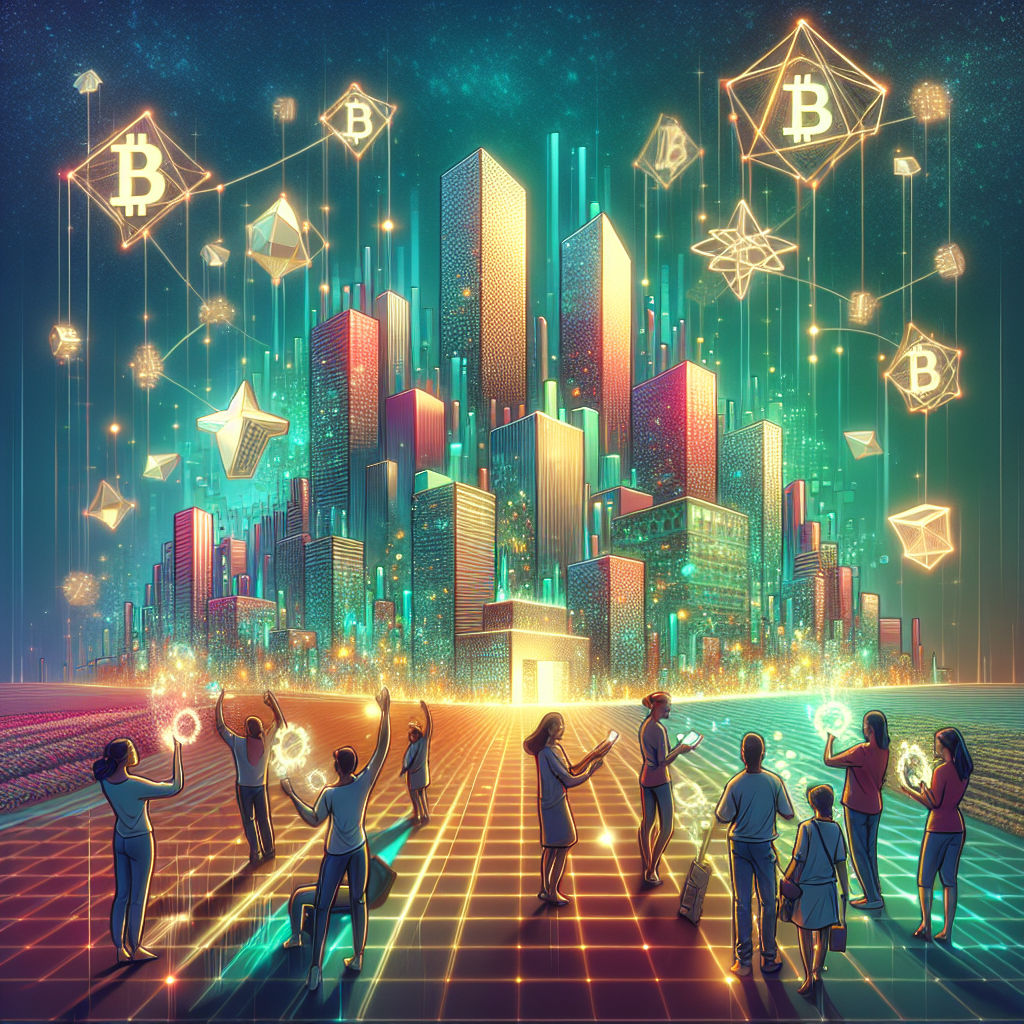
Real-World Asset Tokenization Goes Mainstream: How Blockchain-Powered Platforms Are Bringing Private Credit, Real Estate, and Alternative Investments to Everyday Investors Today
Imagine being able to invest in a luxury Manhattan condo or a basket of small-business loans with just a few clicks—no calls with brokers, no six-figure minimums, no clunky paperwork. Not long ago, this kind of access to real-world assets was reserved for the ultra-wealthy and giant institutions. Now, thanks to tokenization and blockchain technology, the floodgates are opening.
A wave of startups and financial giants are racing to digitize everything from fine art to farmland, slicing assets into blockchain-based tokens that anyone with an internet connection and a few hundred dollars can buy. It’s not just a fintech fad. This push is reshaping how money flows into private credit, real estate, and alternative investments—markets that have long been out of reach for most investors.
But what does this revolution really mean? Is it just hype, or are the doors to once-exclusive markets genuinely being thrown open? And perhaps most crucially: what should investors, builders, and policymakers actually do as blockchain-powered asset platforms go mainstream?
Let’s unpack what’s happening, why it matters right now, and how the tokenization of real-world assets could reshape investing as we know it.
The Backstory: From Illiquid Assets to Digital Tokens
Traditionally, investing in real-world assets like private loans, infrastructure, or commercial real estate was the domain of institutional investors—think pension funds, endowments, or family offices. The barriers were high: steep minimum investments (often $100,000 or more), lengthy lock-up periods, and reams of legal paperwork. For the average investor, these assets were practically invisible.
Enter blockchain technology. Blockchains are shared, tamper-resistant digital ledgers that enable the creation, transfer, and management of digital tokens—unique, programmable representations of ownership, value, or rights. Over the past decade, blockchains have proven their mettle with cryptocurrencies like Bitcoin and Ethereum. But the real breakthrough for mainstream investing is this: tokens can represent not just digital-native assets, but rights to real-world value.
Tokenization is the process of converting ownership in a physical or traditional financial asset into a digital token on a blockchain. These tokens can be fractionalized (divided into small pieces) and traded peer-to-peer or on specialized platforms, sometimes with automated compliance and instant settlement. The result? A much wider pool of investors can access assets that were once locked away, and asset owners can tap new sources of capital.
While early experiments with tokenized real estate and art emerged in the late 2010s, adoption was slow—hampered by regulatory gray zones, technical hurdles, and lack of market infrastructure. But in the last two years, several ingredients have come together: improved blockchain scalability, regulatory clarity in some regions, strong demand for yield in a low-rate environment, and the rise of institutional-grade platforms.
How Tokenization Platforms Work: The Nuts and Bolts
At its core, a real-world asset (RWA) tokenization platform acts as a bridge between the traditional financial world and the blockchain. Here’s a simplified rundown of how these platforms operate:
-
Asset Origination and Custody: A platform partners with asset originators—such as real estate developers, lenders, or private equity firms—to source assets. These could be income-producing properties, baskets of loans, invoices, or even fine art. The assets are legally held by a custodian or a special-purpose vehicle (SPV).
-
Token Creation: The economic rights to the asset (such as income streams or ownership) are digitized into tokens on a blockchain. Each token may represent a claim on a share of the asset, a slice of the income, or some other contractual right.
-
Investor Onboarding and Compliance: Investors undergo KYC (Know Your Customer) and AML (Anti-Money Laundering) checks, either through the platform or integrated services. Depending on jurisdiction and asset type, tokens may be restricted to accredited investors or open to retail.
-
Primary Sale and Trading: Tokens are offered for sale—either in primary offerings (direct from the issuer) or on secondary markets. Investors can buy, sell, or sometimes use these tokens as collateral for DeFi loans.
-
Ongoing Management and Reporting: Platforms handle income distribution (like rental payments or loan interest), provide regular reports, and offer tools for tax and compliance.
What’s remarkable is the range of assets being tokenized today: from corporate debt to U.S. Treasury bills, student loans, single-family homes, and even intellectual property. Some platforms are fully on-chain (with smart contracts automating almost everything), while others use a blend of traditional legal structures and blockchain rails for settlement and record-keeping.
Real-World Examples: Platforms, Data, and Deals
Let’s ground this in reality. Here are some of the most notable platforms and projects making waves as of mid-2024:
Private Credit: Ondo, Maple Finance, and Centrifuge
- Ondo Finance has issued over $300 million worth of tokenized U.S. Treasuries and short-term bonds, letting crypto-native and mainstream investors access government debt with low minimums and on-chain settlement.
- Maple Finance specializes in tokenized private credit, enabling investors to pool funds and lend directly to vetted corporate borrowers. Since 2021, Maple has facilitated over $2 billion in loans, with real-world assets making up a growing share.
- Centrifuge brings invoice financing and small-business loans on-chain, often targeting underbanked regions. Their tokenized pools have attracted both crypto funds and traditional financial institutions.
Real Estate: RealT, Brickken, and Backed
- RealT, based in the U.S., fractionalizes single-family rental properties, allowing global investors to buy “shares” in homes for as little as $50. As of June 2024, RealT has tokenized over 350 properties, distributing steady rental income on-chain.
- Brickken and Backed focus on commercial and residential properties in Europe. Backed, for instance, recently closed a €5 million tokenized real estate fund in Switzerland, with all investor rights managed via smart contracts.
Alternative Investments: Art, Music, and More
- Securitize has tokenized shares of private equity funds, venture capital, and even rare collectibles. Its platform is registered with the U.S. SEC as a transfer agent and broker-dealer.
- AnotherBlock and Royal allow fans to buy fractions of music royalties, turning future income from songs into tradeable, blockchain-based claims.
Institutional Moves: BlackRock, Franklin Templeton, and JPMorgan
- BlackRock, the world’s largest asset manager, launched its first tokenized fund (BUIDL) on Ethereum in early 2024, quickly attracting over $450 million in deposits.
- Franklin Templeton offers tokenized money market funds, settling investor shares on public blockchains while maintaining traditional regulatory compliance.
- JPMorgan uses its private Onyx blockchain to settle tokenized repo trades and other institutional instruments, handling billions in daily volume.
By the numbers: According to Boston Consulting Group, the total value of tokenized real-world assets was estimated at $6–8 billion in early 2024. Projections (which should be taken with caution) suggest this could climb into the hundreds of billions by the end of the decade, as more traditional assets enter the blockchain world.
Why Now? Key Drivers Behind the RWA Boom
Several forces are converging to make real-world asset tokenization not just possible, but inevitable:
- Search for Yield: In a world of volatile markets and uncertain banks, investors are desperate for stable, income-generating assets. Tokenized real-world assets offer exposure to things like U.S. Treasuries, real estate, and private credit—long considered safe harbors.
- Blockchain Maturation: Improvements in blockchain speed, cost, and interoperability (think Ethereum’s Layer 2s, Avalanche, Polygon, etc.) have made it feasible to settle and manage assets at scale.
- Regulatory Clarity: While still uneven, jurisdictions like Switzerland, Singapore, the EU, and parts of the U.S. have clarified how tokenized securities can be issued and traded, encouraging institutional adoption.
- Legacy System Friction: Traditional asset settlement can take days or weeks, with high fees and limited transparency. Tokenized platforms promise near-instant, low-cost settlement and 24/7 markets.
- Democratization and Inclusion: Perhaps most importantly, tokenization lowers minimum investment thresholds and expands access to global investors, potentially reducing wealth concentration and financial exclusion.
Risks, Limitations, and Trade-Offs: The Devil in the Details
While the promise is enormous, tokenized real-world assets aren’t a silver bullet. Here’s what investors, builders, and policymakers need to keep in mind:
1. Technical and Operational Risks
- Smart Contract Bugs: Vulnerabilities in the code can lead to loss of funds or mismanagement of assets.
- Oracles and Data Feeds: Tokenization relies on accurate off-chain data (property values, loan payments, etc.) being fed onto the blockchain. If these are compromised, so is the system.
- Custody and Hack Risk: While tokens are on-chain, the physical or legal assets they represent are still off-chain and subject to fraud, mismanagement, or seizure.
2. Regulatory and Legal Risks
- Jurisdictional Uncertainty: Laws governing tokenized securities, KYC, and investor protections vary widely by country and even by state.
- Enforcement and Recourse: If something goes wrong (like a property default), investors may have little recourse, especially across borders.
- Licensing and Compliance: Platforms must navigate a thicket of securities regulation, AML rules, and tax compliance—failure here can shut down projects overnight.
3. Economic and Market Risks
- Liquidity Illusions: While tokens are tradeable, real-world asset markets can still be illiquid, especially in stress scenarios. You might not be able to exit quickly or at a fair price.
- Valuation Uncertainty: Determining the fair value of a tokenized asset is tricky, particularly for niche or private markets.
- Counterparty Risk: Investors are still exposed to the creditworthiness of originators, custodians, and platforms.
4. User Risks and Complexity
- Wallet Management: Losing access to your wallet means losing your tokens. Not every investor is ready for self-custody.
- Platform Reliability: Many projects are startups with limited track records. Failures can lead to loss of access or assets.
- Information Asymmetry: The legal rights attached to a token may be murky or hard to enforce, especially for retail investors.
Practical Guide: How to Approach Tokenized Real-World Assets
For those eager to dip a toe—or a whole foot—into this new world, here’s a checklist to keep your head above water:
For Investors
- Due Diligence: Research the platform’s regulatory status, track record, and legal structure. Is it licensed? Who audits the assets? How are tokens backed and redeemed?
- Understand the Asset: Know what you’re buying. Is it a claim on income, equity, or something else? What are the underlying risks?
- Check the Fine Print: Read the token’s offering memorandum or legal docs. How are disputes resolved? What happens in case of default or platform failure?
- Assess Liquidity: Can you sell your token easily? On which markets? At what spreads or fees?
- Diversify: Don’t go all in on a single platform or asset class. Spread your risk.
For Builders and Startups
- Legal First: Secure legal counsel early, especially around securities laws and cross-border compliance.
- User Experience: Make onboarding, custody, and reporting as seamless as possible.
- Transparency: Regularly publish audits, asset reports, and smart contract code.
- Partnerships: Work with established custodians, auditors, and compliance firms to build trust.
For Policymakers
- Encourage Innovation, Protect Investors: Create sandboxes or pilot programs that allow experimentation, but with robust investor safeguards.
- Harmonize Rules: Work towards standardizing regulations across jurisdictions to reduce friction.
- Educate the Public: Fund educational initiatives on the risks and opportunities of tokenized assets.
What’s Next? The Road Ahead for Tokenized Real-World Assets
The tokenization of real-world assets is no longer the stuff of whitepapers or crypto conferences—it’s happening in boardrooms, on trading desks, and in the portfolios of everyday investors. In the next year or two, expect to see:
- Major banks and asset managers launching their own tokenized funds and products, targeting both institutional and retail investors.
- Expansion into new asset classes, from infrastructure to carbon credits to royalties and beyond.
- Improved interoperability and regulation, making it easier to move assets between blockchains and comply with local laws.
- Growing pains, including occasional high-profile failures, regulatory crackdowns, and technical hiccups.
For all the hype, the fundamental story is simple: tokenization has the potential to make investing fairer, faster, and more global. But as the walls between traditional finance and crypto come down, new risks will emerge, and the devil will be in the details.
For investors and builders willing to do their homework, the coming years will offer both pitfalls and unprecedented opportunities. Watch this space—tokenized real-world assets are moving from the margins to the mainstream, and the next chapter is just getting started.
What to Do Next
- Complete KYC and security setup before funding.
- Use a test transaction first.
- Set risk limits and automate alerts.
Recommended Next Reads
- Benefits of Blockchain in Real Estate:
blockchain-real-estate-benefits - How Tokenization Works:
how-tokenization-works - Investing in Alternative Assets:
investing-alternative-assets
Sources and Further Reading
- World Economic Forum: Tokenization of Assets
- Deloitte: The Tokenization of Assets is Disrupting the Financial Industry
- CoinDesk: Real-World Asset Tokenization Explained
FAQ
What is real-world asset tokenization?
Real-world asset tokenization is the process of representing ownership of physical or traditional financial assets—such as real estate, private credit, or art—on a blockchain in the form of digital tokens. This allows for fractional ownership, easier transferability, and broader access for everyday investors.
How does blockchain technology make investing in private credit and real estate more accessible?
Blockchain technology enables the creation and trading of digital tokens that represent shares in assets like real estate or private credit. This reduces barriers such as high minimum investments, complex paperwork, and limited access, allowing more investors to participate with lower amounts and greater transparency.
Are there risks involved in investing in tokenized real-world assets?
Yes, risks include regulatory uncertainty, platform security vulnerabilities, and potential illiquidity of the tokens. Investors should conduct thorough due diligence on the platform, underlying assets, and legal frameworks before participating.
Stay Updated
Subscribe to your site newsletter for weekly market breakdowns, tool comparisons, and risk alerts.
Leave a Reply